What it is
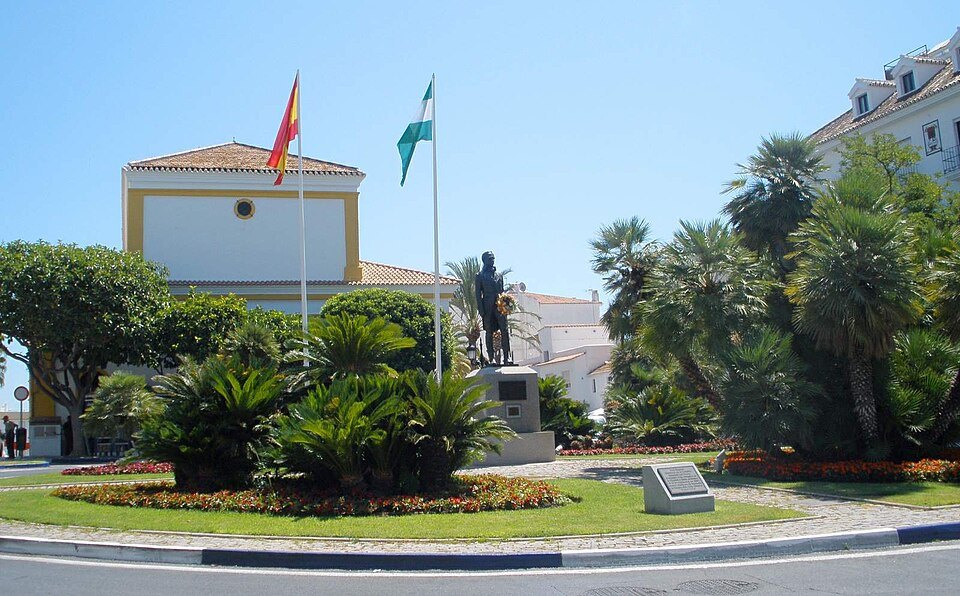
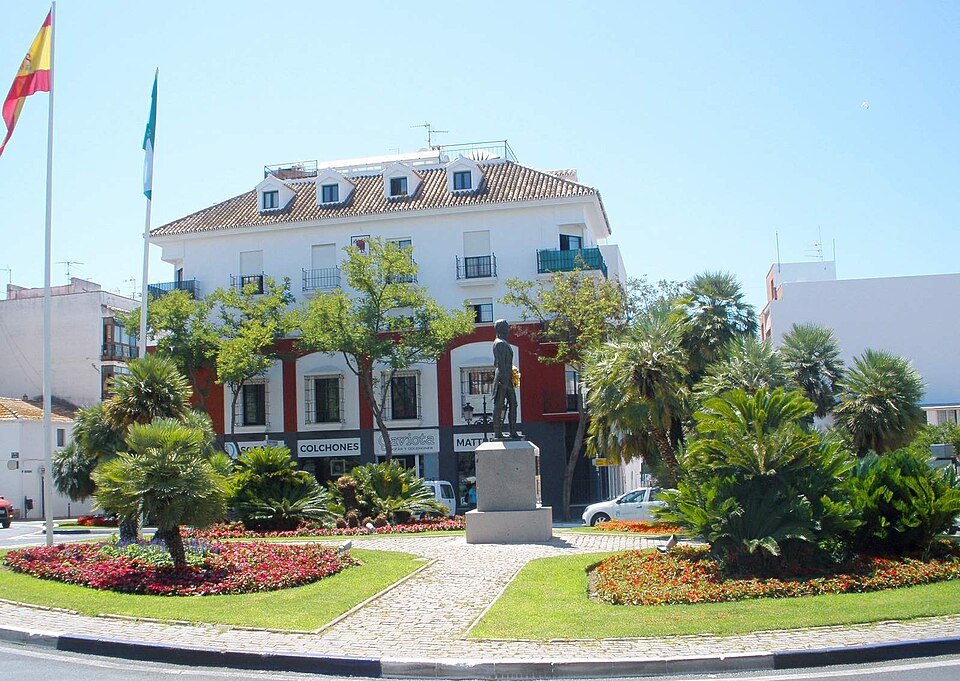
San Pedro Alcántara is part of the municipality of Marbella, to the west, but it has always been a town of its own. It began as the Colonia Agrícola de San Pedro Alcántara, founded in 1860 by the soldier and politician Manuel Gutiérrez de la Concha, first Marquis of the Duero — one of the most modern agricultural colonies in 19th-century Spain.
⭐ The colony's emblem showed the saint surrounded by farm tools, framed in sugar cane, under the motto Virtud y trabajo — virtue and work. Sugar was the point.
What is here
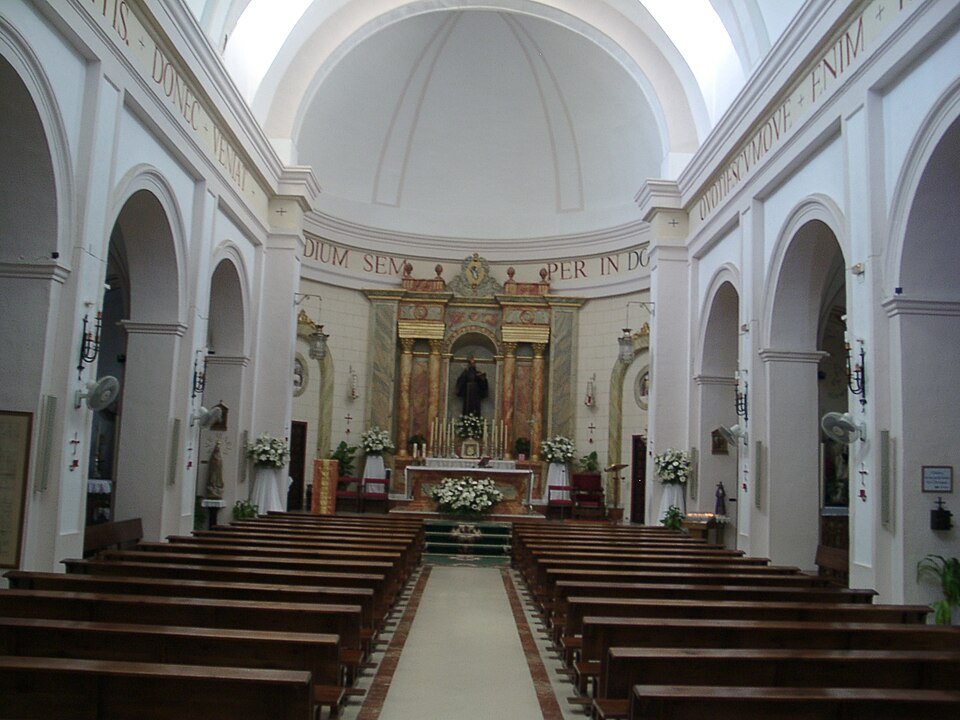
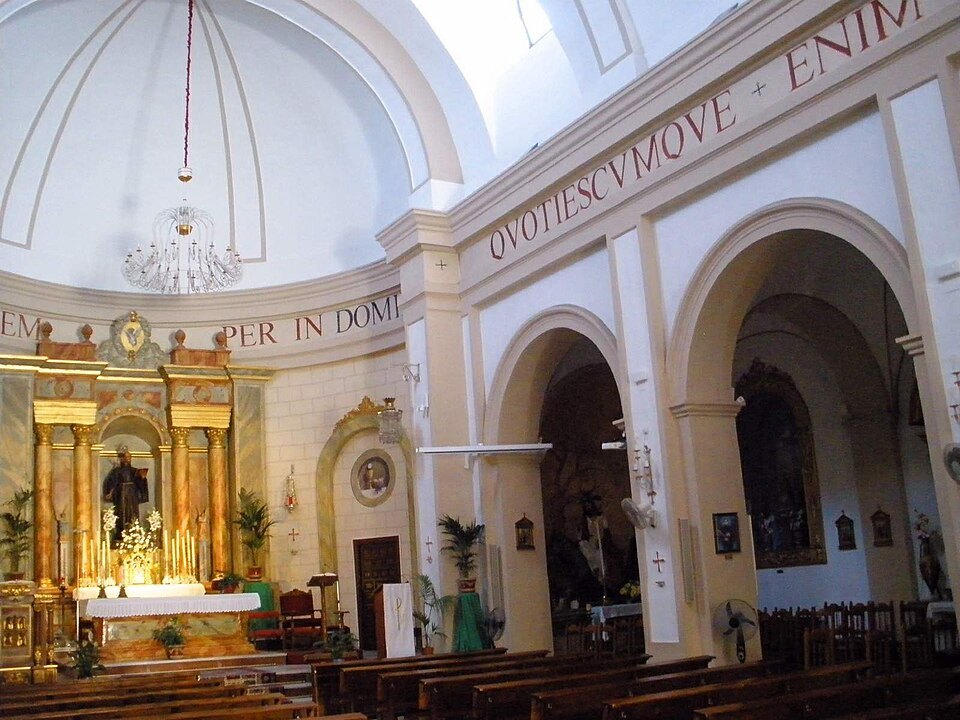
A town center with its church of San Pedro de Alcántara and a monument to the marquis who founded it, and a long landscaped boulevard built over the main road where it once cut through the town.
Down at the coast are the beaches of San Pedro and Guadalmina — and, near the mouth of the Guadalmina, the Roman baths of Las Bóvedas and the early church of Vega del Mar.
Getting it right
⭐ Come for an ordinary evening — the boulevard, a bar, the square. San Pedro is where you see the municipality living its own life rather than performing for visitors.
How the colony was laid out
The colony grew out of the Land Resettlement Act of 1855, and Spanish sources give its founding as 1857 or five years after the act. It was an estate of almost 5,000 hectares, put together from the coastal inheritance of the marquis's wife and from purchases and exchanges, spread across Marbella, Estepona and Benahavís around the river plains of the Guadaiza, the Guadalmina and the Guadalmansa. Small dams, an extensive irrigation system and good tracks for moving goods allowed intensive farming on it.
The original plan provided 146 houses with gardens for the settlers, along three parallel north-south streets later named Lagasca, Marqués de Duero and Pizarro, with cross streets of which the most important, beside the square, was Revilla. Around the square went the church, the administrator's house, a private residence, a company store, a Civil Guard post and an inn. Walk those streets today and the grid is still there under the modern town.
Sugar, then everything else
Sugar cane was the main crop until irrigated sugar beet was introduced in 1881. In 1871 the marquis opened a modern sugar and alcohol factory, which gave its name to the El Ingenio district, and the sugar was shipped to Málaga from the beach of La Salida. The sugar works closed in 1915, though the distillery ran until at least 1934. What survives is the alcohol factory, a tower about 15 meters high and a long hall with a wooden roof, with a band of blue and white tiles and the interlaced letters SPA on its front. The town council acquired it in 1983, and it is now the La Alcoholera theater.
After the marquis died in 1874 the colony was sold to his creditors, who formed a Spanish-French company. The colony stood out for its size, its settlers, its kilometers of irrigation channels, its farms, reservoirs, factory, model farm and electricity plant, and for imported reapers and threshers; it was advised by the Cuban engineer Álvaro Reynoso and employed engineers mainly from France.
Three buildings around the square
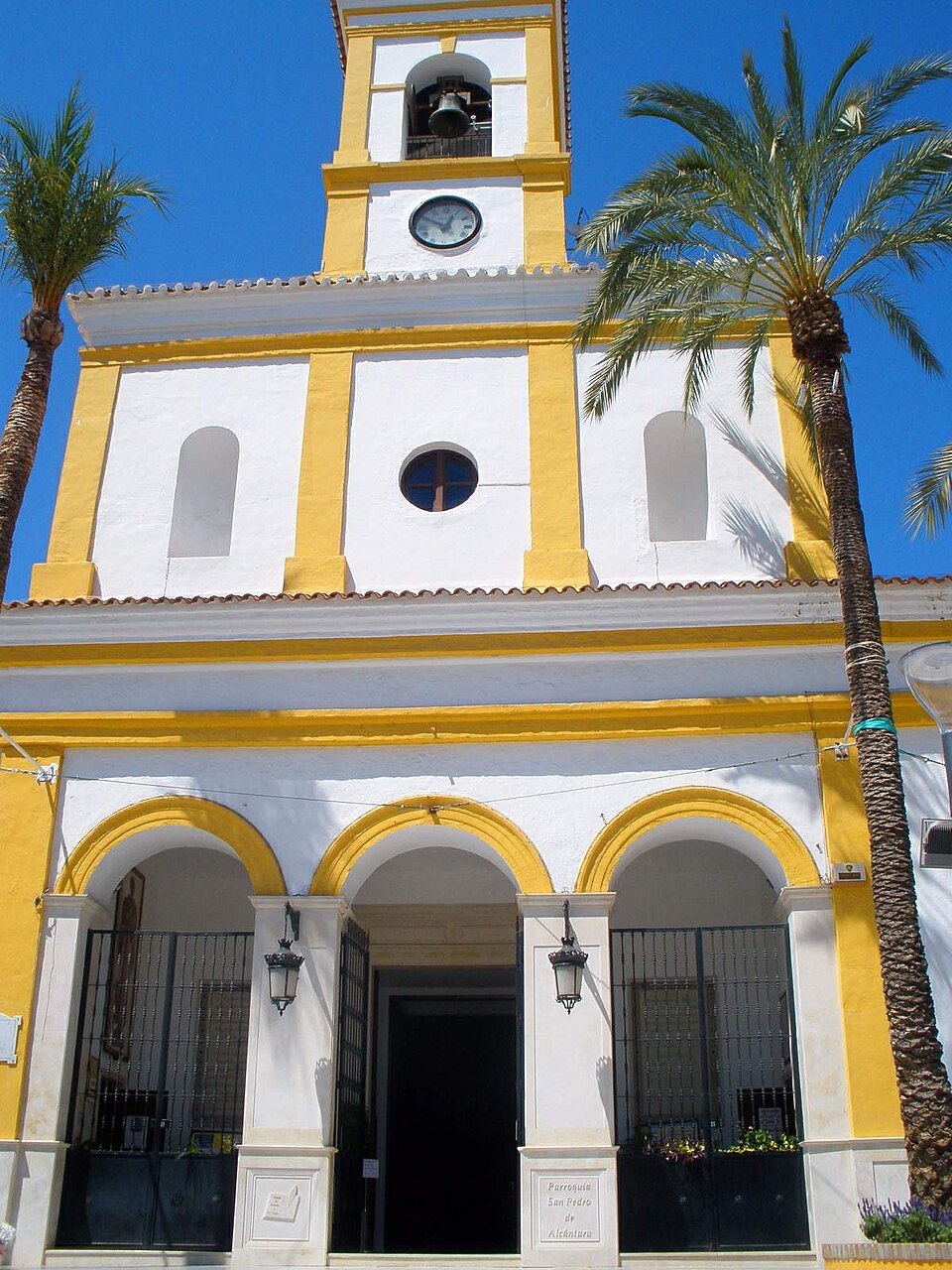
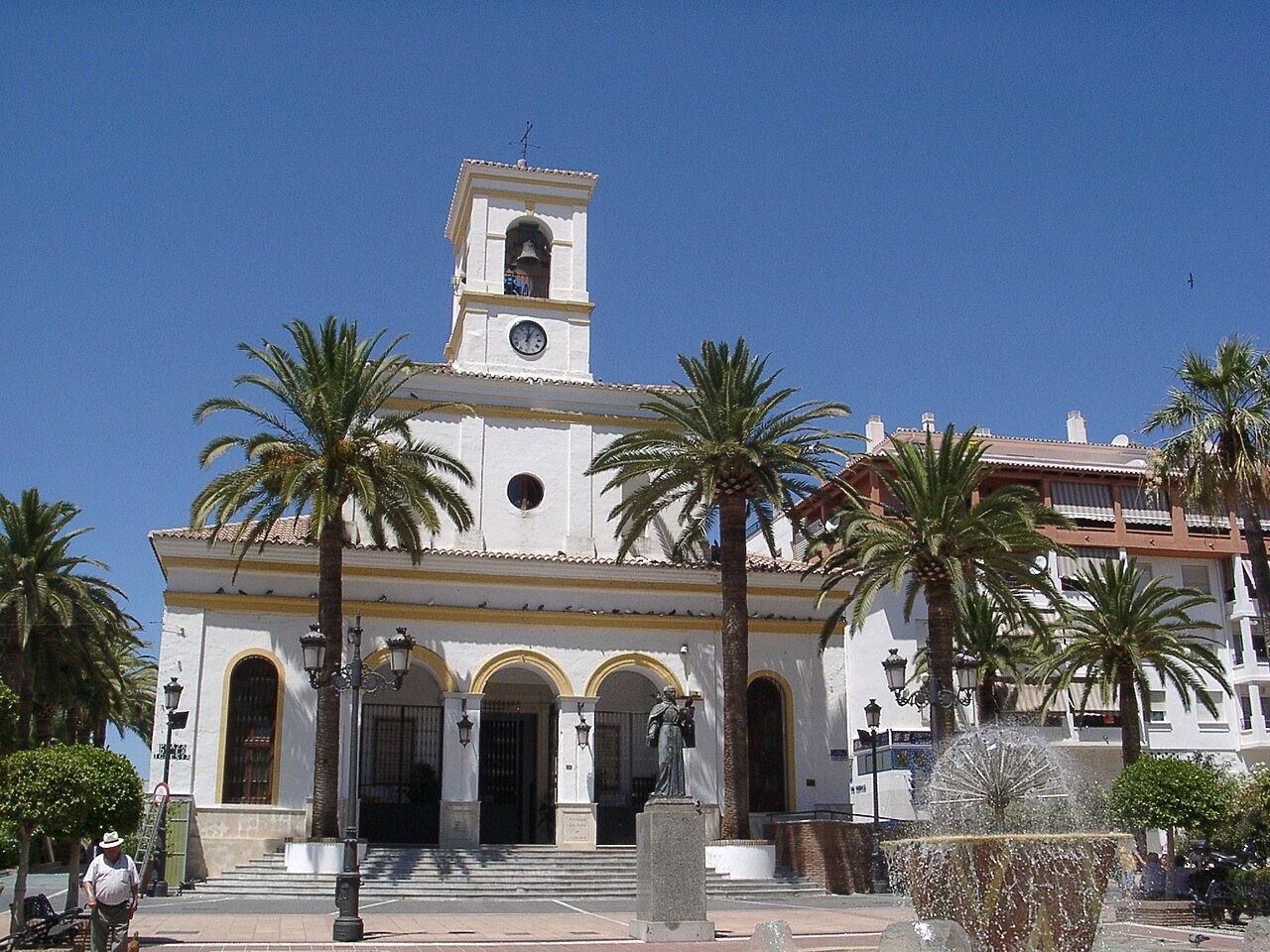
The church of San Pedro de Alcántara was built between 1860 and 1866 and opened in 1869. It was burned in 1936, restored and reopened in 1943, and became a parish in 1944. Its front is the thing to see: an open triple porch at ground level, a second story divided by pilasters with a round window and two niches, and a small square tower with a four-sided roof rising from the front slope of the roof, a tower-porch scheme that the heritage institute compares to the Portichuelo of Antequera. Its colonial style may reflect the marquis's Latin American origins.
Also on the square is the Villa de San Luis, a three-story house built in 1887 for the de Cuadra Raoul family, French-Spanish bankers and industrialists who had bought the colony company. It was named after Luis Manuel de Cuadra, first Marquis of Guadalmina, by his widow Clara Raoul, who had been born in New Orleans. The town council bought it in 1946, and it is now the seat of San Pedro's district council.
The model farm
The oldest industrial building in the area is the Trapiche de Guadaiza, built as a sugar mill in 1823 by Juan Lesseps and worked by water brought along an aqueduct, some of whose arches survive. In 1861 the marquis agreed with the government and the provincial council to turn it into a model farm and school for farm foremen, the first of its kind in Spain, where the latest threshing and winnowing machines were tried out. Disputes over the investment ended the project in 1865. The building was restored in 2015 and is now the Trapiche de Guadaiza cultural center.
The boulevard
The long park through the middle of town opened in 2014, once the N-340 had been put underground. Designed by the San Pedro architect Juan Antonio Fernández, it has gardens, fountains, a bike lane, five playgrounds, an amphitheater for 500 people and a footbridge over the avenida Marqués del Duero with views of the center and the sea.
Sources
- Iglesia de San Pedro de Alcántara — IAPH, Guía Digital del Patrimonio Cultural de Andalucía
- Colonia industrial agrícola San Pedro de Alcántara — IAPH
- Trapiche de Guadaiza — IAPH
- San Pedro Alcántara — Wikipedia (es)