What it is
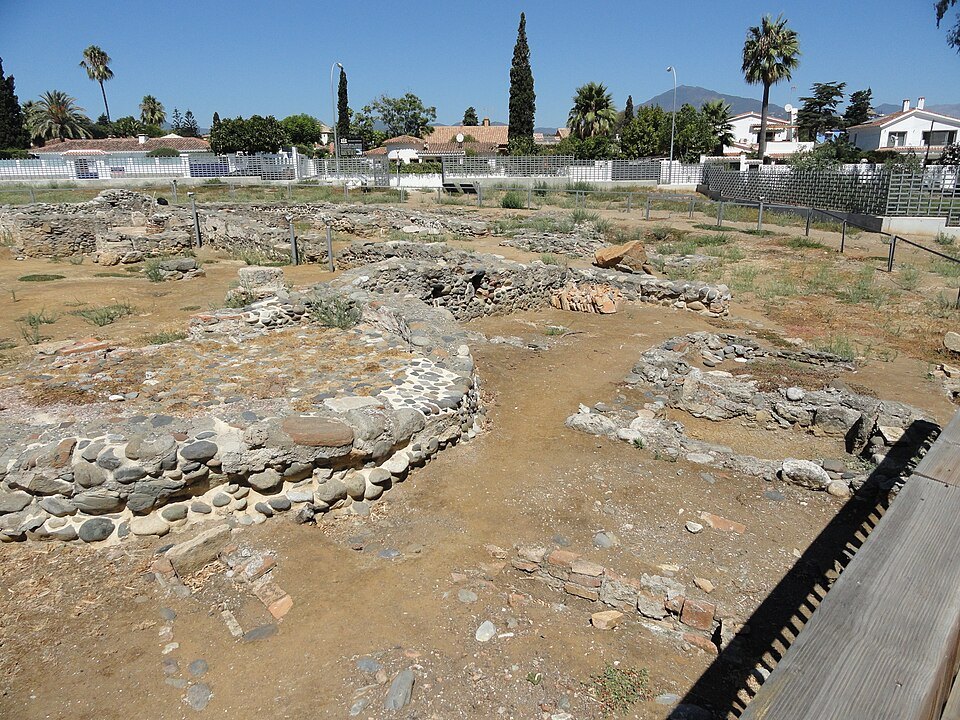
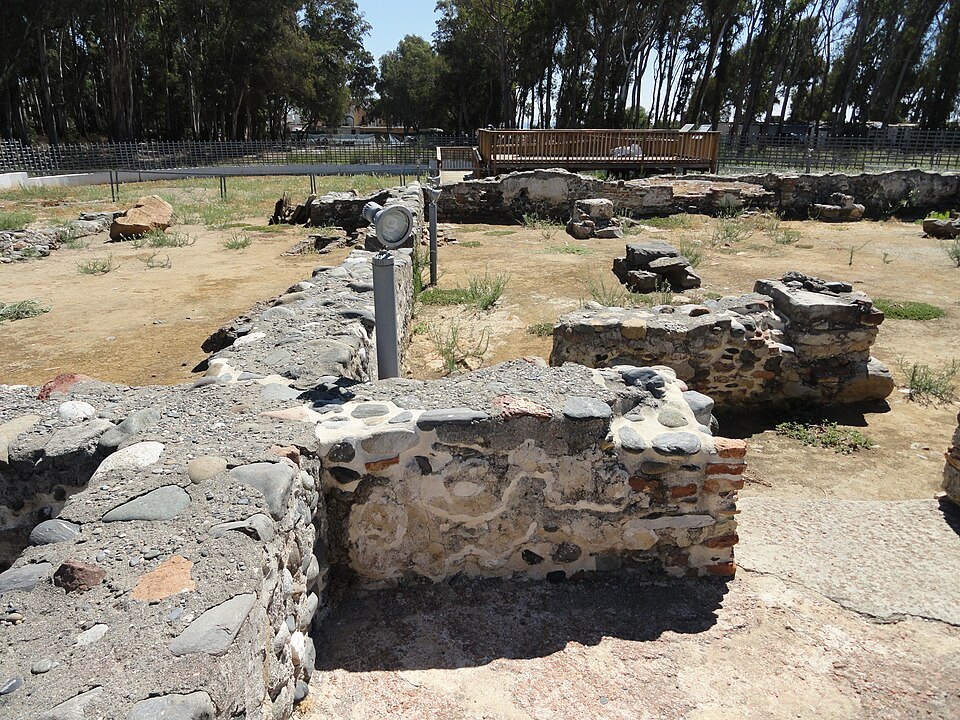
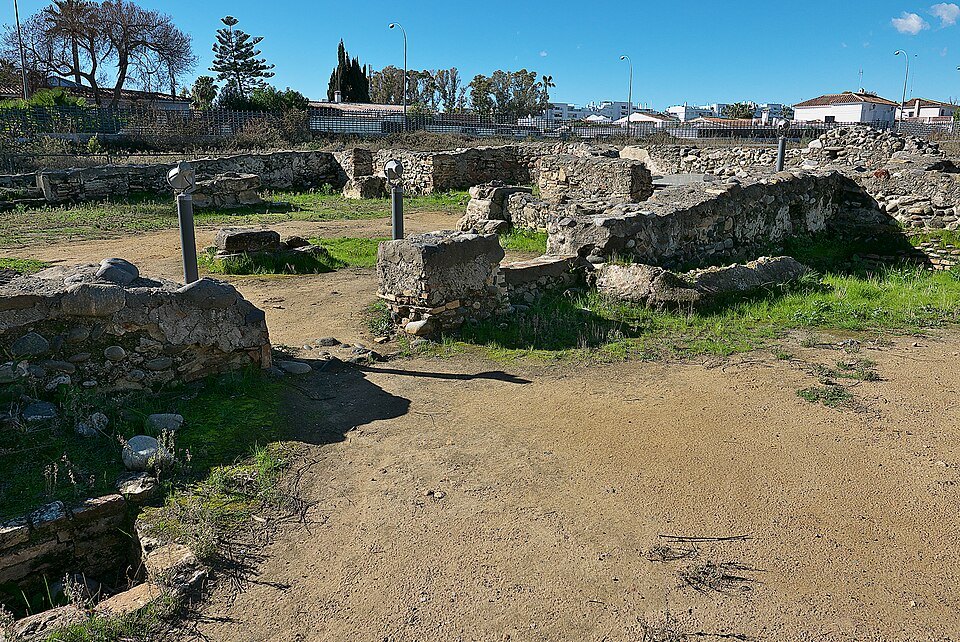
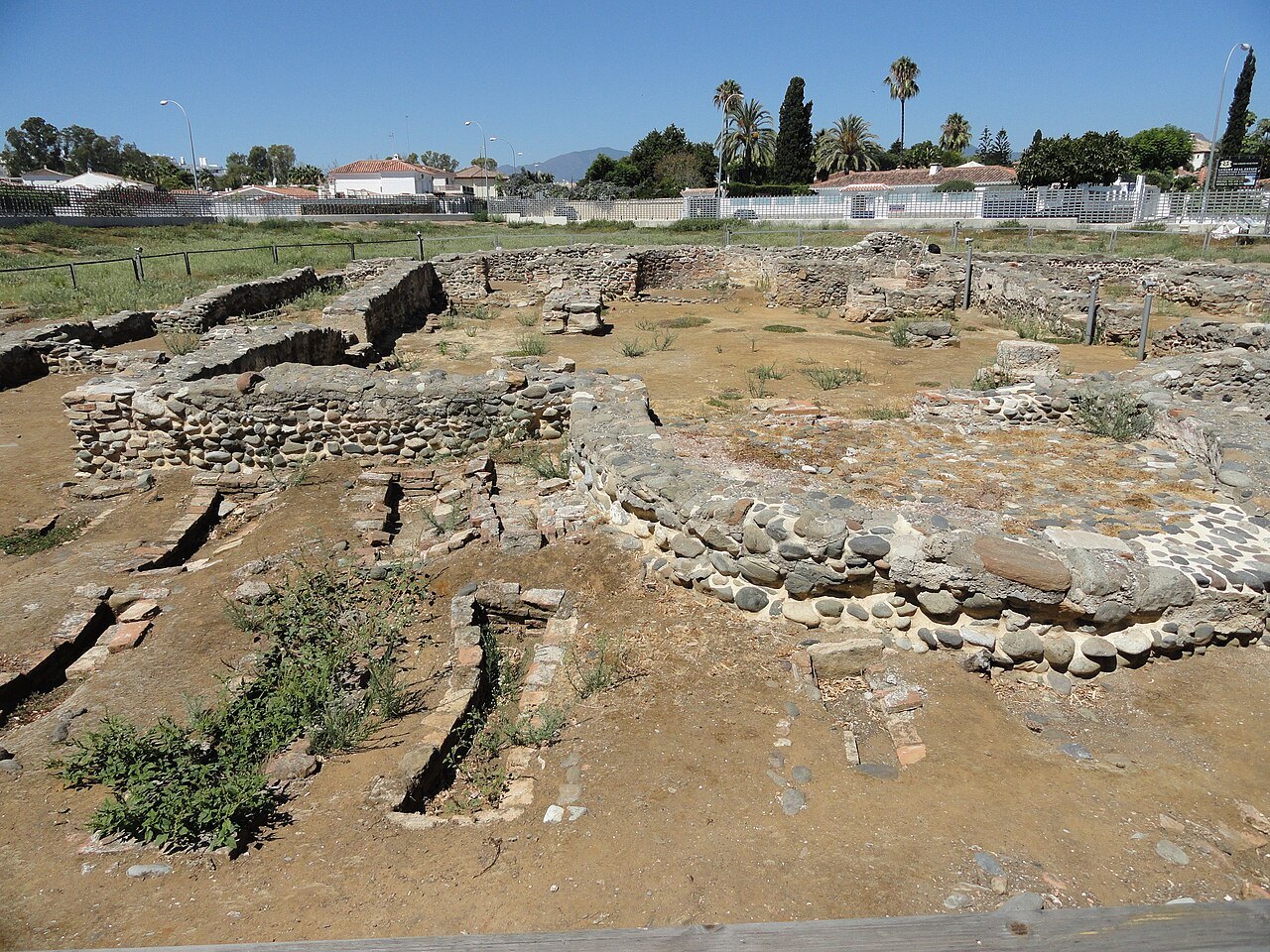
The basilica of Vega del Mar is one of the few churches of North African type built in Andalusia in the 6th century — and it was built over an earlier Christian basilica from the 4th. Only parts of its walls survive.
It stands near the mouth of the Guadalmina, close to the sea and to San Pedro Alcántara, on the line of the old Roman road along the coast.
What to look for
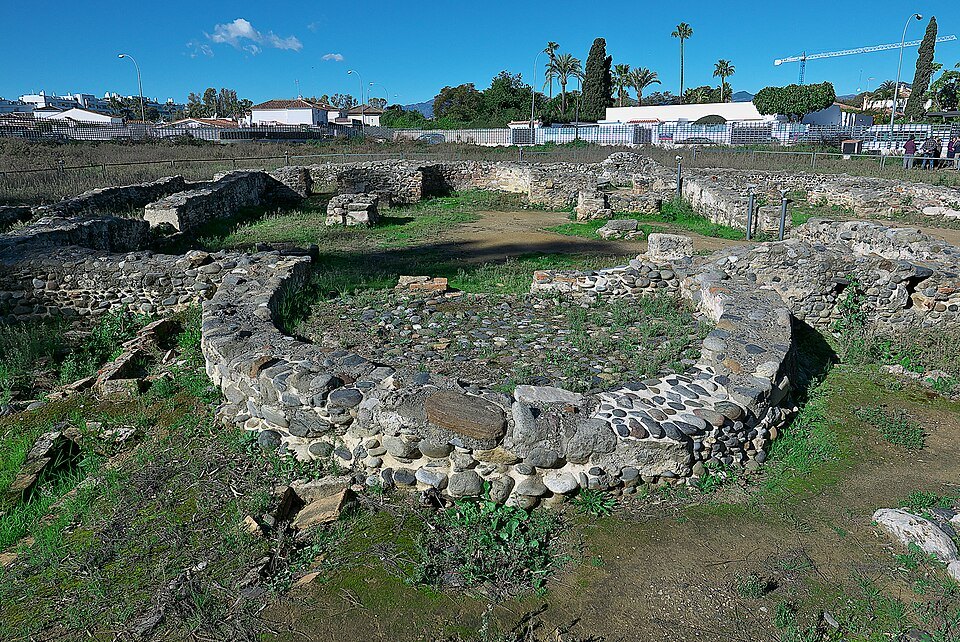
The plan is almost square, with three naves and — the North African signature — two apses facing each other at either end. The western one, horseshoe-shaped, was the heart of the church.
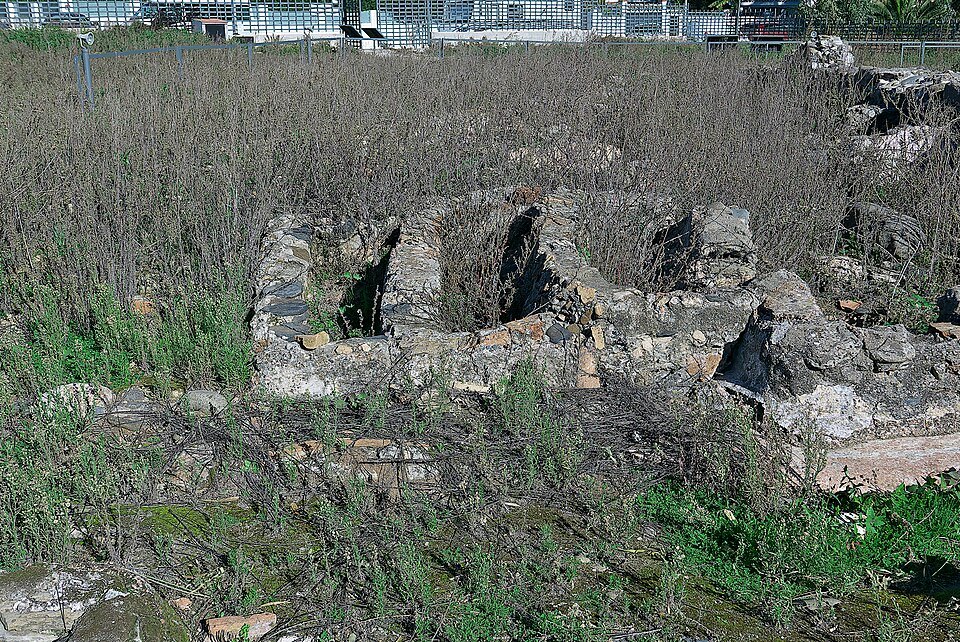
⭐ In one of the side rooms is a baptismal font cut from stone: fish-shaped on the outside, four-lobed within. More than 180 graves from different periods surround the church, which went on being used as a burial ground long after it was built.
Getting it right
⚠️ As with Las Bóvedas, access is arranged rather than open; ask at a tourist office first. The two sites belong together.
Found by tree planters
The site came to light at the beginning of the twentieth century, when the land near the river mouth was being replanted with eucalyptus. Excavation began quickly, in 1916, under José Martínez-Oppelt, and was continued with great success from 1930 by the archaeologist José Pérez de Barradas. His work uncovered the first structures of the double-apsed basilica and the cemetery around it, from which he excavated a total of 148 graves.
After a long gap in research the monument was in poor condition, and when the national archaeology congress met in Málaga, leading scholars pressed for urgent measures; money was found to clean the site and fence it. Excavation resumed at the end of the seventies. The last of those campaigns, in 1981 under Rafael Puertas Tricas and Carlos Posac Mon, produced a plan of the basilica and the cemetery at a scale of one to fifty and documented 32 more tombs.
Which century?
The dates depend on whom you read. The Spanish Wikipedia article describes a Visigothic church of North African type from the sixth century, built over an earlier Christian basilica of the fourth. The report on the 2001 excavation, published by the Junta de Andalucía, describes the double-apsed basilica as probably built in the last third of the fourth century. Either way, the 2001 report counts it among the most important archaeological sites in the province of Málaga.
The church stands on what was once a small rise. The layers that later buried its slopes contain pottery from the early Roman Empire through to finds that can be dated to around the sixth century, along with pockets of building rubble: bricks, fragments of roof tile, lumps of mortar and opus signinum.
Reading the plan
The church is almost square, about 11.5 meters on each side, with three naves. The western apse, the main focus of the building, is horseshoe-shaped and set inside a rectangle that leaves a room on either side, and it is in one of these that the baptismal font is found. The church stood on the old Roman road that linked Cádiz with Cartagena.
The graves
The 2001 excavation, carried out before a visitor building and viewpoint were put up by the town council, opened 983 square meters around the church and showed how burial practice changed over time. The graves range from bodies laid in the ground without a pit to pits lined with roof tiles, with bricks or with stone slabs, and their covers range from none at all to flat tiles, double layers of tiles and bricks, tiles set like a pitched roof, bricks, or stone slabs. Each stage in the sequence is marked by a change in the way the graves were built.
The archaeologists covered the most vulnerable tombs with earth, wrapped unexcavated graves in geotextile, and the town council began fencing the excavated area. Their conclusions call for further work on the relationship between the cemetery, the church and the settlement it served, and for dating the human remains themselves.
Part of a Roman town?
The basilica is a short walk from Las Bóvedas, the Roman baths at the same river mouth, and the heritage institute's record for the baths treats the two as possibly parts of one place. The bath building is larger than a villa would normally have, there are fish-salting tanks beside it, and the finds include plenty of terra sigillata and a large number of coins. Together they may mark the Roman town of Cilniana, a road station listed in the Antonine Itinerary.
If that is right, the cemetery around the church held the dead of a coastal town that lived from salt fish and the coast road, and went on burying them here long after the church itself was built.
Sources
- Intervención arqueológica de urgencia en la basílica paleocristiana de Vega del Mar — Anuario Arqueológico de Andalucía 2001 (Junta de Andalucía)
- Basílica de Vega del Mar — Wikipedia (es)
- Termas romanas de Las Bóvedas — IAPH, Guía Digital del Patrimonio Cultural de Andalucía