What it is
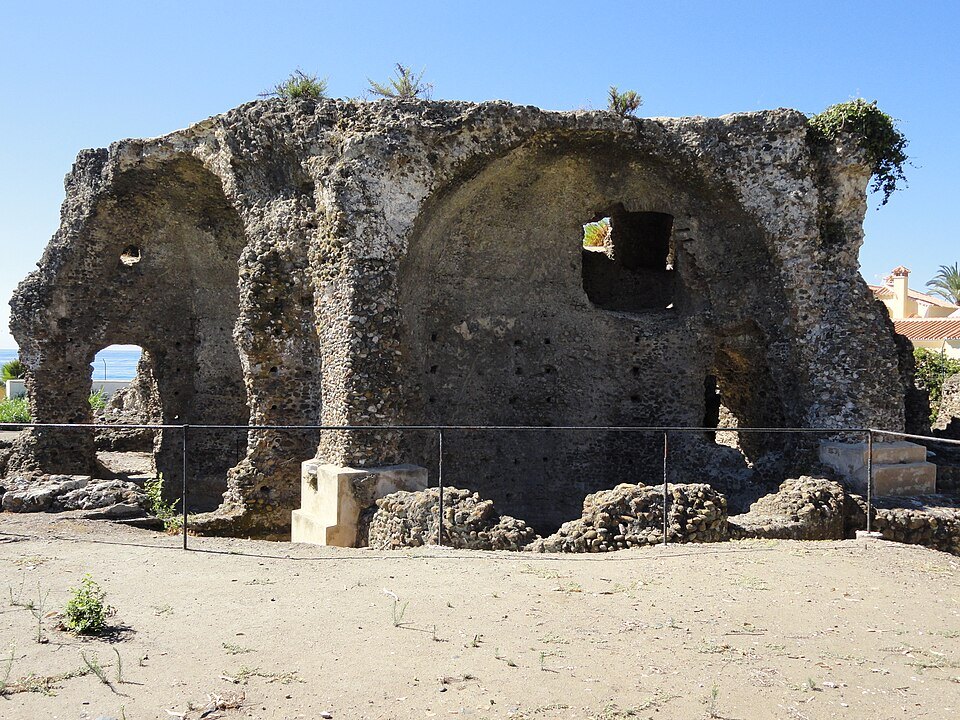
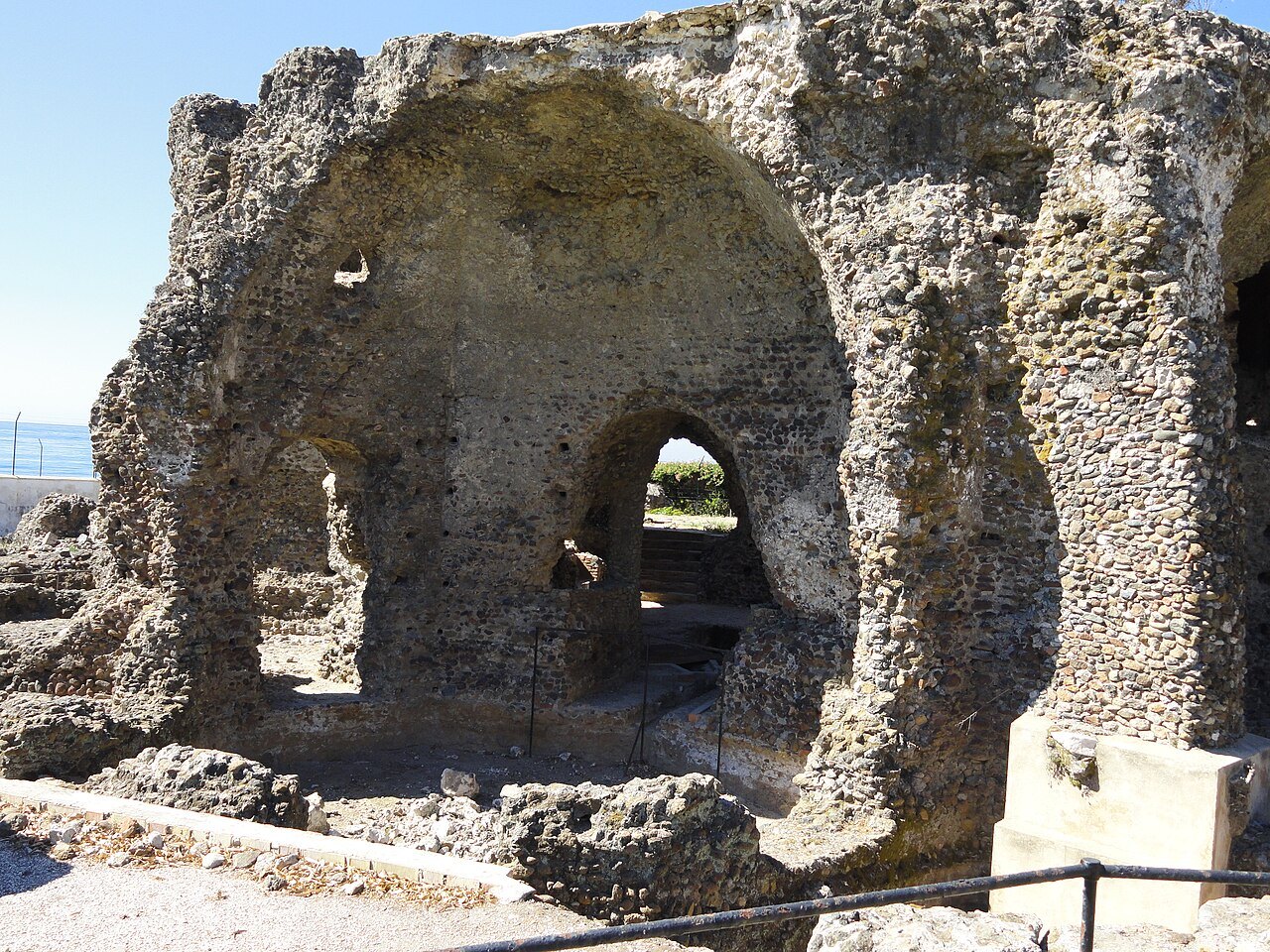
Bóvedas means vaults. The site stands on the right bank of the Guadalmina where it meets the sea, beside San Pedro Alcántara, and its main building is a set of Roman baths that has always been visible above ground.
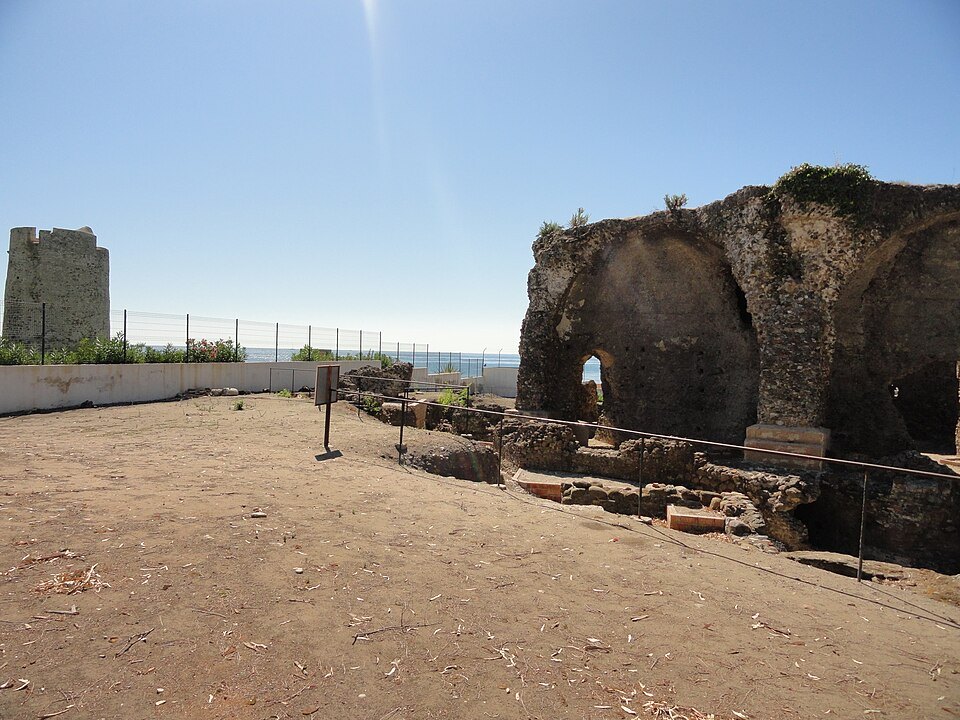
Around it are tanks used for salting fish and making the fish sauces the Roman world traded in, and a watchtower from a much later period. The quality of what survives has led archaeologists to think this may be Cilniana, a road station listed on the Roman Antonine Itinerary.
Seeing it
⚠️ This is not a site you simply walk into. Visits to the interior are arranged, and the arrangements change; ask the tourist office in Marbella or San Pedro before you make the trip.
The outside, and the watchtower above the beach, can be seen from the shore.
With it
⭐ The late-antique church of Vega del Mar is very close by, near the same river mouth. The two belong in the same half-day.
How the baths were built
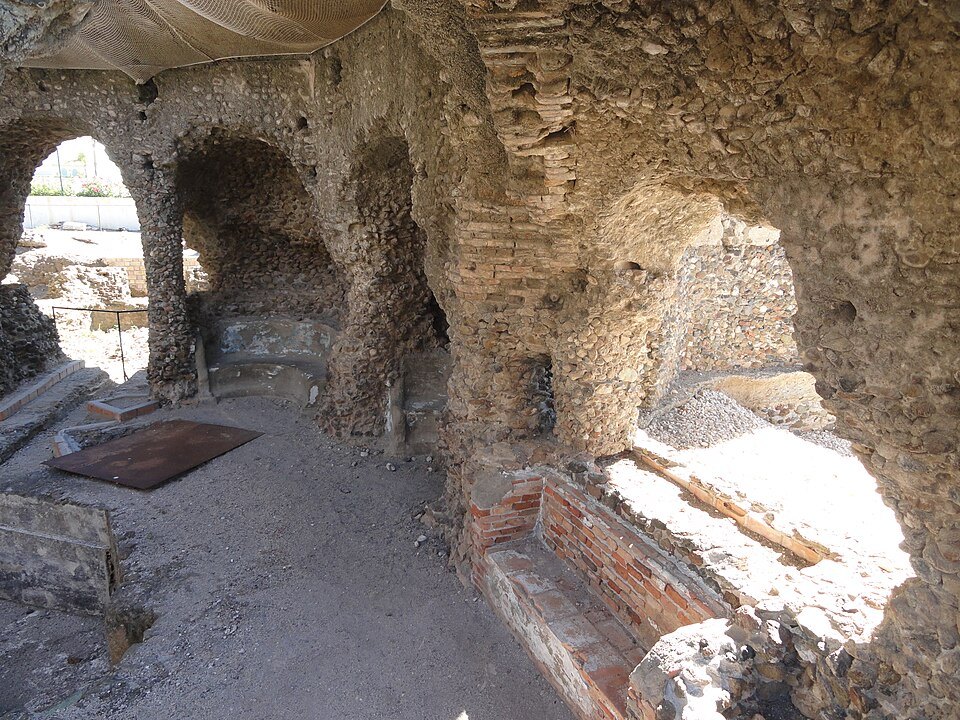
The baths are built mainly of Roman concrete, opus caementicium, strengthened with brick, and at least in some parts the walls were faced with marble slabs. The building is known for the variety of its masonry: brickwork combined with irregular stone, opus incertum, and floors of opus signinum, the Roman mix of crushed pottery and lime. What sets it apart is how much survives. Part of the vaulted roof is still in place, the building still stands two stories high, and the remains of its heating system are still there.
An octagonal plan
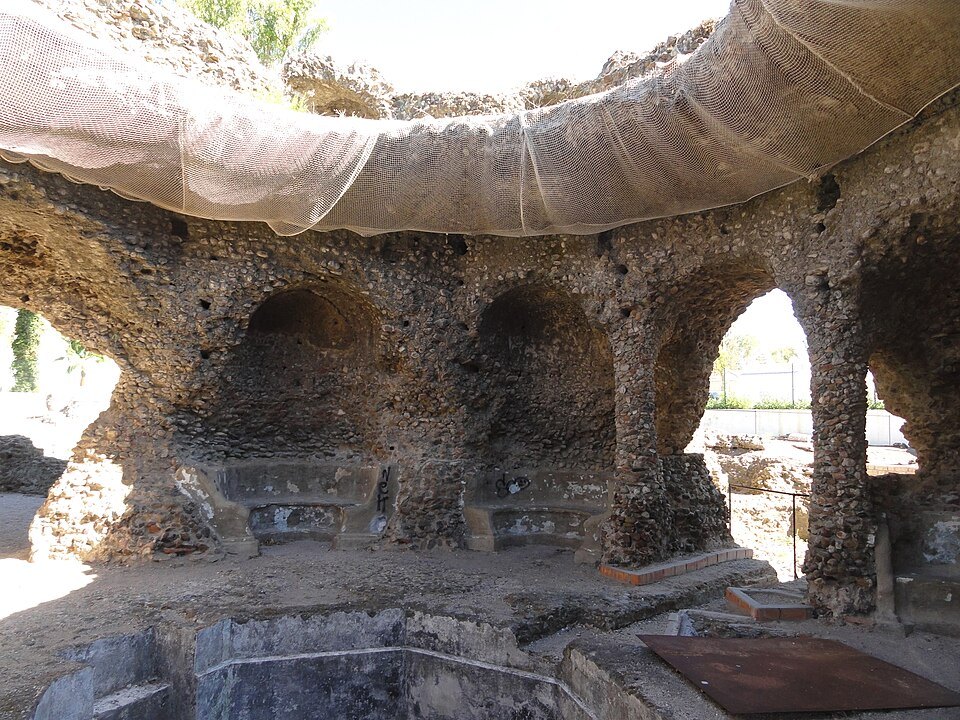
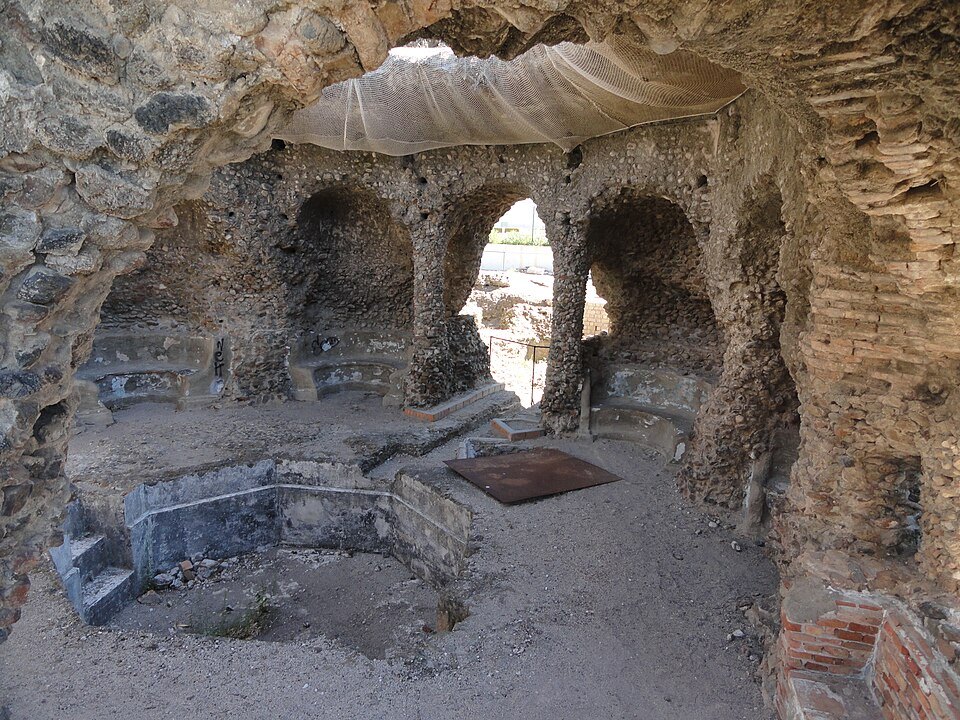
The main building is arranged around a central octagonal hall, with other rooms, also octagonal, opening off it. In the eastern part you can see the suspensurae, the raised floors on small pillars that let hot air circulate beneath, and patches of the original mosaic floor in large tesserae. This area was linked to a furnace, the praefurnium, that fed the hot room, the caldarium, and excavation has found several furnaces in the building.
The two rooms furthest north show none of this heating equipment and must have belonged to the cold part of the bathing sequence; the western one held a cold-water pool. The central hall has a floor of opus signinum running into four niches, and in places upright slabs of oolitic limestone, thought to come from the quarries of El Torcal near Antequera, raise a platform that traces the octagon exactly. At the center of the hall is an octagonal pool, the part of the building most disguised by the many later uses it has been put to.
A town, not a villa?
The bath building is larger than a villa would normally have. Taken together with the fish-salting tanks around it and the nearby basilica of Vega del Mar, it may belong to a single Roman settlement, perhaps Cilniana. The finds support the idea: plenty of Roman pottery, above all the glossy red tableware called terra sigillata, and a large and significant number of coins. The site was declared an archaeological zone of cultural interest by a decree of July 24, 2007.
The watchtower
About 50 meters from the baths, on the beach of Guadalmina, stands the Torre de las Bóvedas, named after the vaulted building beside it. It was built of rubble masonry between 1571 and 1575 to hold weapons, one of the chain of watchtowers along the coast, each in sight of the next so that a warning could be passed along and a defense organized, and it was designed for firearms.
Like the towers of Río Real and Ancón, it is round and tapers toward the top: 8.2 meters across at the base, about 26 meters around and more than 10 meters high. The lower part is solid. The chamber above is entered on the north-east side, almost seven meters off the ground, and an inner stair leads to a roof terrace with a parapet and the remains of machicolations, the projecting openings from which defenders dropped stones on attackers. It has been protected as a monument of cultural interest since 1985.
To find it, take the old coast road, the N-340, from Estepona toward San Pedro and turn right at Guadalmina Baja, just before the arch of San Pedro. The archaeological zone around the tower has kept the building of the area at bay.
What the site has yielded
The rows of tanks around the baths were for salting fish and making the fish sauces that were traded around the Roman Mediterranean, and they are a reminder of what paid for a bath house this size on an empty stretch of coast.
The site has been studied for decades. Among the publications listed by the heritage institute are a study of the coins found at Las Bóvedas, a topographic survey of the bath building, and geological and archaeological research into how the line of this coast has shifted since Roman times. A separate paper examines a fragment of a Roman cavalry parade helmet found here.
Sources
- Termas romanas de Las Bóvedas — IAPH, Guía Digital del Patrimonio Cultural de Andalucía
- Torre de las Bóvedas — IAPH
- Termas romanas de Las Bóvedas — Wikipedia (es)
- Torre de las Bóvedas — Wikipedia (es)