What it is
The Museo del Grabado Español Contemporáneo opened on November 28, 1992. It was founded on a private collection of more than two thousand prints given by the art historian José Luis Morales y Marín, and it has kept to that brief: original graphic work — etching, lithography, screenprint — by Spanish artists of the last century and this one.
⭐ The building is half the reason to go. The old Hospital Bazán is a 16th-century Renaissance civic building, one of the finest in the town, set right in the old town.
What is in it
Rotating displays from the collection, temporary exhibitions, and a working printmaking workshop — the museum also runs national printmaking prizes, which is why the work on the walls changes.
Many of Spain's major 20th-century painters made prints, and a collection of this size reflects that.
Getting it right
It is small: an hour is plenty. Check what is on before you go, because the temporary shows are the variable.
⭐ A good answer to a midday in August, when the lanes outside are at their hottest.
A hospital for the poor
The building began as the main house of Alonso de Bazán, governor of the fortress and a permanent member of the town council. In his will he left his houses to become a hospital for the town's poor, dedicated to Santa María de la Encarnación; the heritage record dates the will to 1568 in one place and 1570 in another, and the hospital itself was set up at the beginning of the seventeenth century. A board of patrons ran the foundation until relatively recently.
For nearly three centuries it cared for the sick, staffed by the Trinitarian friars of the convent next door, whose ruins still stand beside it. For a time it was a home for foundlings from Marbella and Estepona, and afterwards it served many different purposes. Restoration began in 1989, and the building reopened as the museum. The heritage institute counts the founding of the hospital among the most important events in the town's history.
Reading the building
Two separate houses on steeply sloping ground were joined to make it, which is why the inside keeps changing level. Behind the first range is a square main courtyard with arcades of round brick arches framed by alfiz moldings on Tuscan columns. On its west side was the hospital chapel and the Bazán family vault: a single irregular nave with a square sanctuary under a dome, its pendentives painted with coats of arms framed in plaster drapery.
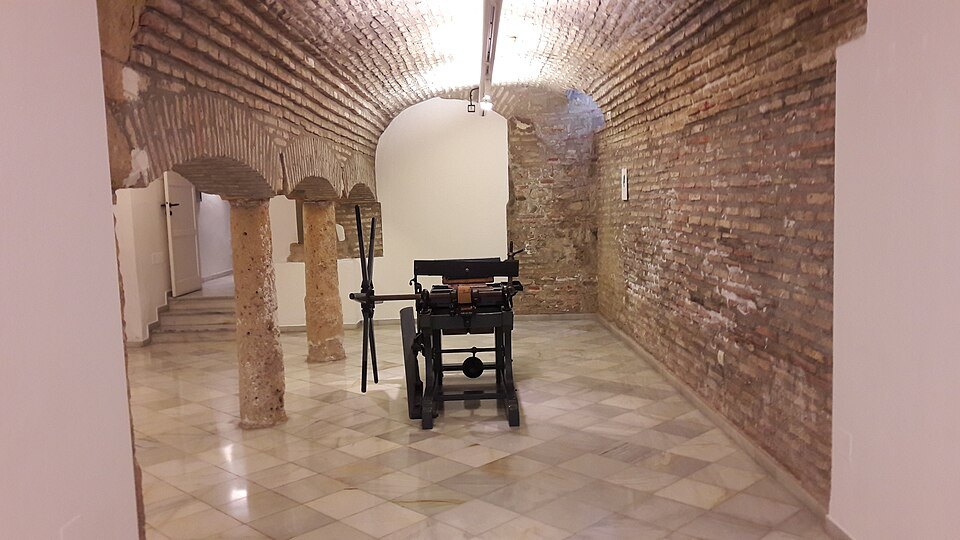
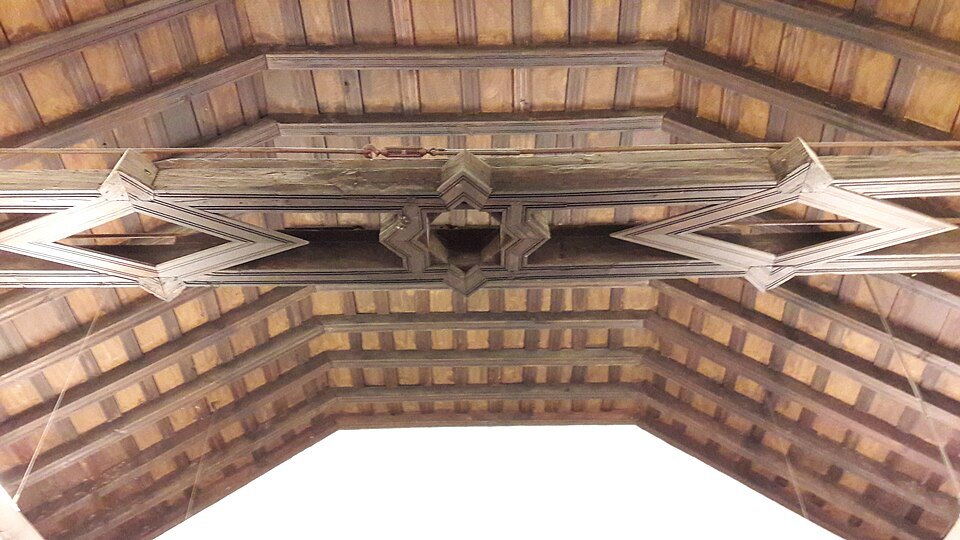
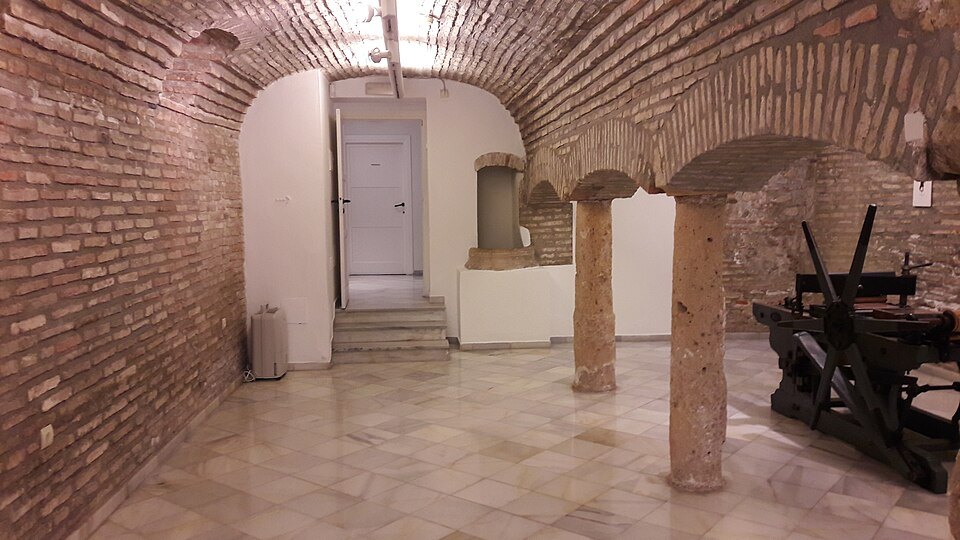
Look up in the rooms. On the ground floor, the first floor and the second floor there are Mudéjar timber roofs of several types, some with tie beams carved in interlacing patterns. In the lower level is a room with a well, vaulted on rough marble columns without capitals. The style is Renaissance with a strong Gothic-Mudéjar stamp.
From outside, the feature to find is the lookout tower at the south-west corner, built of sandstone blocks. On its west side it opens through a single round arch with rosettes and a pierced stone parapet carrying the Bazán coat of arms; on the south side is a gallery of three arches under one frame. Two doorways at its foot are the most notable of the entrances, one in exposed brick and one in sandstone under stepped brick eaves.
The collection
The museum was the work of José Luis Morales y Marín, a professor at the Autonomous University of Madrid, who gave his collection after many conversations with José Manuel Vallés Fernández, the town's first councilor for culture, while the town council provided and fitted out the building. The foundation's collection has since grown to around four thousand prints, covering every tendency and many of the best known names in modern Spanish art: Picasso, Miró, Dalí, Chillida, Tàpies, Pablo Serrano, Barceló, and the artists of the El Paso group, including Rafael Canogar, Manolo Millares and Antonio Saura.
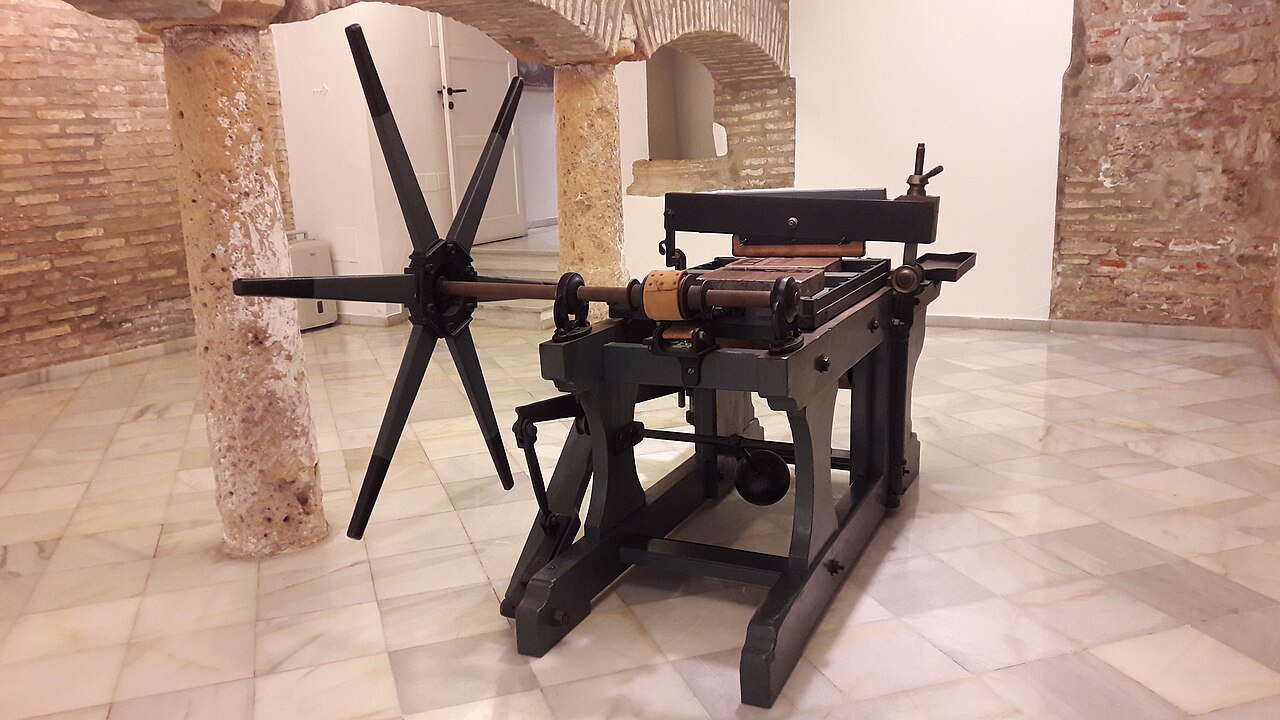
One room is given over to a teaching display on printmaking techniques, which is worth seeing first if etching and aquatint are only words to you. The museum also has a library specializing in art and prints, open by appointment, a shop, guided visits by arrangement, and a workshop that runs introductory and specialist printmaking courses.
The friends and the prizes
A Friends of the Museum association was founded in 1993 under the presidency of María de Salamanca Caro, Countess of Los Llanos. It sponsors two printmaking prizes, one named after her and one after the association, and supports the museum's lectures and visits, which is part of why the work on the walls keeps changing.
Finding it
The hospital stands in the heart of the old town, close to the remains of the caliphal wall and to the Church of the Incarnation, and you reach it through narrow lanes. The ruined Trinitarian convent beside it is the clue that you are in the right place.
Sources
- Hospital Bazán — IAPH, Guía Digital del Patrimonio Cultural de Andalucía
- Museo del Grabado Español Contemporáneo — Wikipedia (es)
- Marbella — Wikipedia (es)