What it is
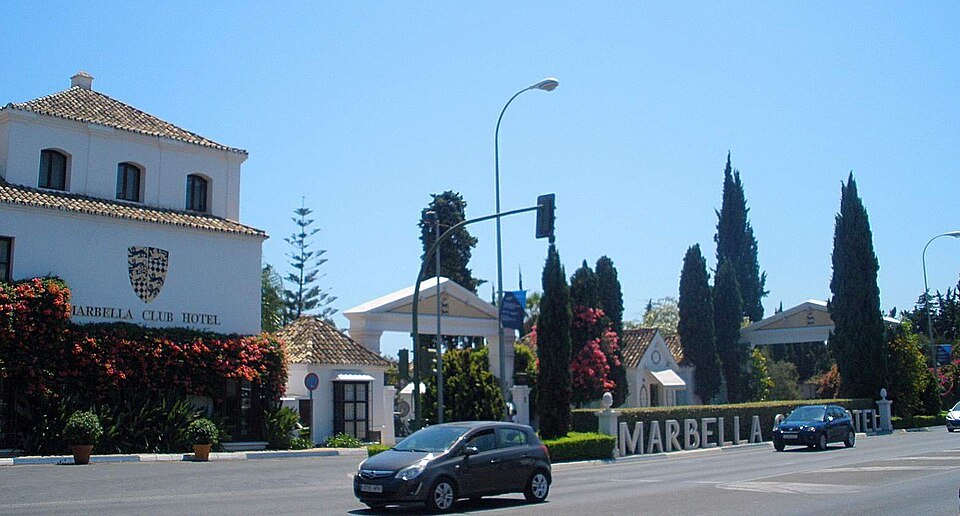
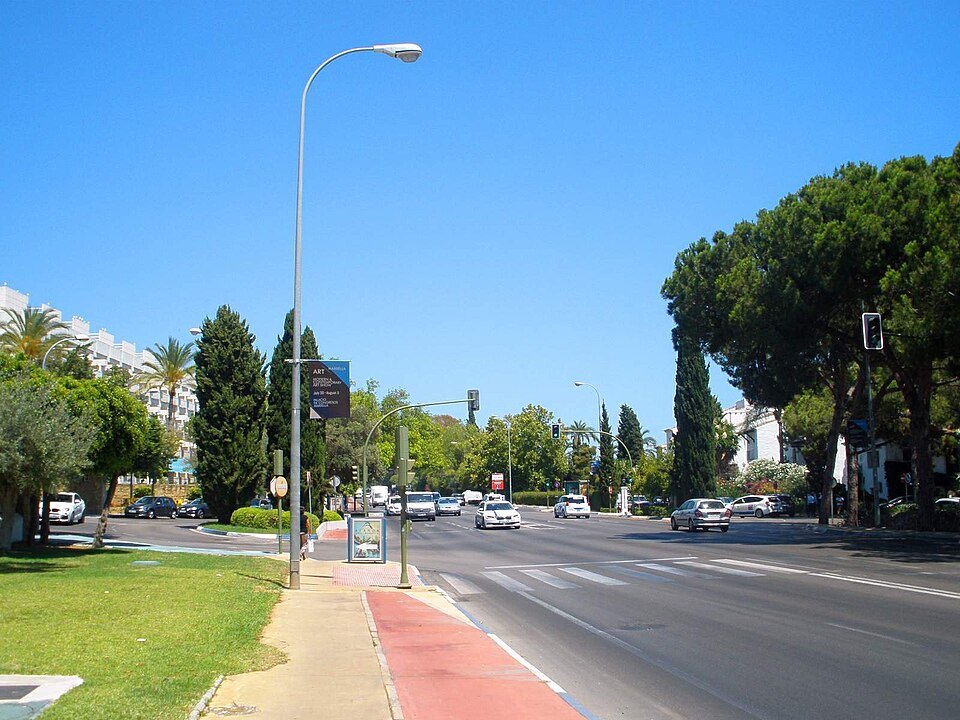
The Milla de Oro is the strip of coast between the center of Marbella and Puerto Banús: hotels, villas behind high walls, the mosque, and the main road running through it all.
⚠️ It is longer than a mile. The name describes the money, not the distance.
How it started
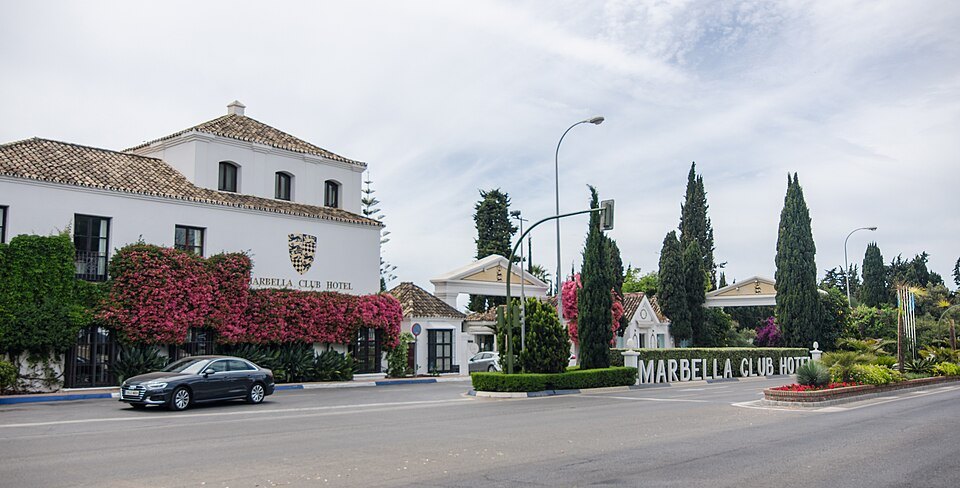
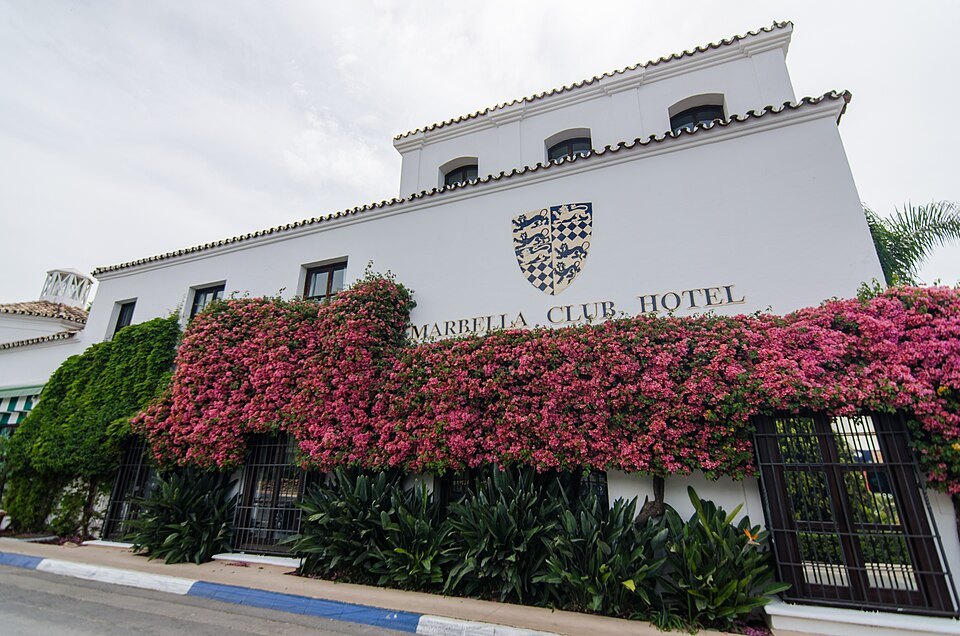
⭐ The Marbella Club Hotel began as the private residence of Prince Alfonso de Hohenlohe-Langenburg (1924–2003), who turned it into a hotel in the 1950s and brought his friends — aristocrats, film stars, heirs. That is the moment Marbella stopped being a farming and fishing town and became a resort.
Everything else on this coast — including Puerto Banús, which opened in 1970 — followed from that.
Seeing it
⭐ Walk it along the seafront, not the road. The promenade runs along the sand in front of the hotels, and the beaches are public — see Beaches for why.
Before the prince
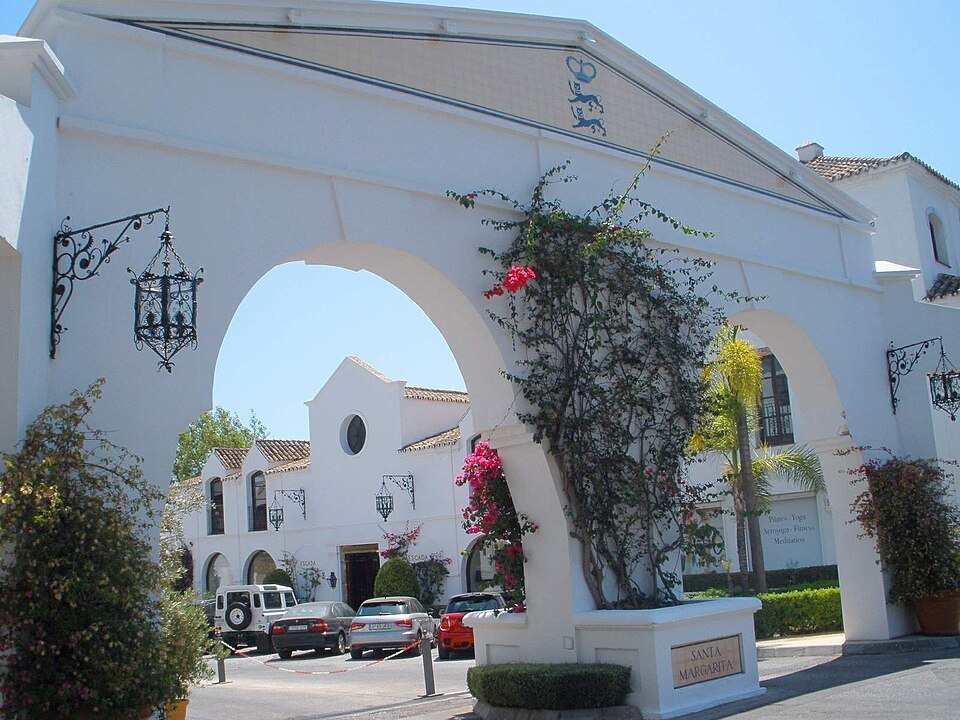
Luxury tourism on this coast did not quite start with Hohenlohe. In 1946 his uncle Ricardo Soriano, Marquis of Ivanrey, bought an estate between Marbella and San Pedro Alcántara and built a tourist complex called the Venta y Albergues El Rodeo, later run by the Málaga businessman Enrique Bolín. Hohenlohe then acquired the Santa Margarita estate, the seed of what became the Marbella Club in 1954 and, in 1975, the Hotel Puente Romano. On the grounds of the Puente Romano is the small Roman bridge over a stream that gave the hotel its name.
Through the fifties and sixties members of well-known European families followed: Bismarck, Rothschild, Thurn und Taxis, Metternich, Goldsmith, Thyssen-Bornemisza, Agnelli, Onassis, Alba, Snowdon and others, turning Marbella into a meeting point of the international jet set. The Golden Mile itself is the roughly four kilometers between the town and Puerto Banús, home to some of the most luxurious houses in Marbella, among them the palace of King Fahd, and to the Meliá Don Pepe, the Marbella Club and the Puente Romano.
The Marbella Club today
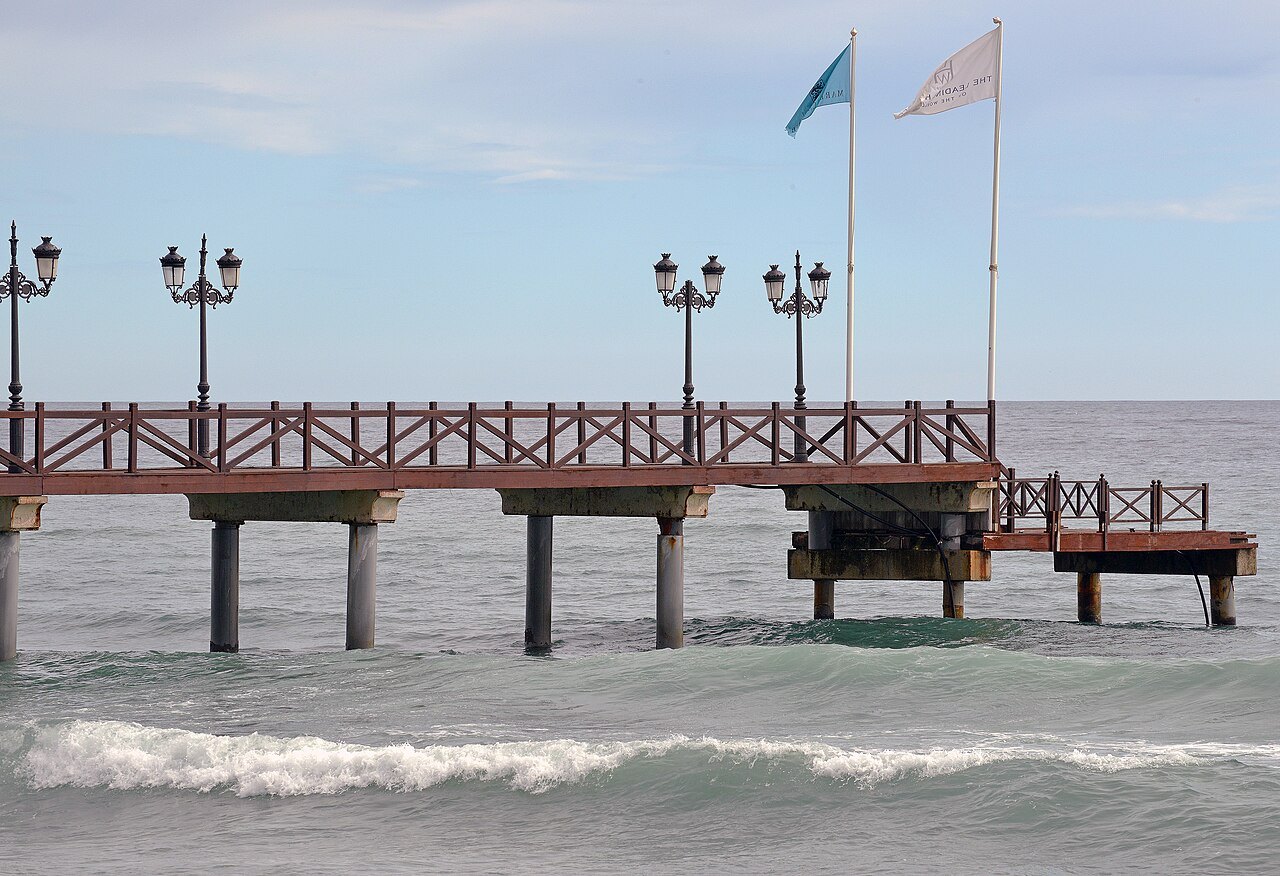
The Marbella Club is still a five-star hotel, a member of The Leading Hotels of the World. Its rooms, suites and Andalusian-style villas are spread through 42,000 square meters of subtropical garden, and its Beach Club, the job that first brought Noldi Schreck to Marbella, is still on the sand.
A modern hotel on the beach
The Hotel Don Pepe opened in 1964, promoted by Pepe Meliá, and the heritage institute records it as a work of modern architecture. Its architect, Eleuterio Población Knappe, born in Huelva in 1928, had been chosen after Meliá saw his hotel in Seville; the commission was for a four-star hotel, but once Meliá saw the model it became a five-star one.
The rules of the 1960s required beachfront blocks to stand at right angles to the sea, so as not to block the views from behind. Población argued that on such flat land the first two floors already blocked them, and built a compact block parallel to the coast: two floors of public rooms and seven floors of bedrooms, 32 to a floor, with a curved bend so the corridors never seem endless. There is a single line of rooms facing south, which gave cross ventilation and cut the need for air conditioning, while the north front is almost blank. The party hall was sunk below ground with a glass view into the swimming pool, under a bar roofed with hyperbolic paraboloids, and the hotel even had its own sewage treatment plant.
Terraces like hanging gardens
Up the hill, north of the main road, the heritage institute also lists Las Terrazas de las Lomas del Marbella Club, by the Madrid architect Fernando Higueras, which it calls one of his best resolved works. Two identical square blocks, joined at one corner and turned 60 degrees to each other, step back floor by floor into a pyramid that recreates the hill it sits on. Its 104 homes all have terraces of white concrete planted as hanging gardens, which shade the rooms in summer and let in the low winter sun, and the views reach from Gibraltar to the eastern end of the municipality.
The Gulf arrives
From the middle of the seventies the fortunes of the Middle East discovered Marbella. Fahd bin Abdulaziz, then heir to the Saudi throne, had the Mar-Mar palace built on the Golden Mile, and in 1981 he and his brother Salman, the present king, built the mosque that stands beside the road. In 1983 the Saudi engineer Muafak Al Midani bought the Marbella Club and Puente Romano hotels, and Adnan Khashoggi, one of the great fortunes of his day, bought the Al Baraka estate in Benahavís, in the hills behind.
That is the layering you drive through on the main road: a prince's farmhouse turned hotel, the modern hotels of the sixties, and the walled palaces and mosque of the Gulf families who came after them.
Sources
- Hotel Gran Meliá Don Pepe — IAPH, Guía Digital del Patrimonio Cultural de Andalucía
- Las Terrazas de las Lomas del Marbella Club — IAPH
- Marbella — Wikipedia (es)
- Marbella Club — Wikipedia (es)
- Marbella — Wikipedia