What it is
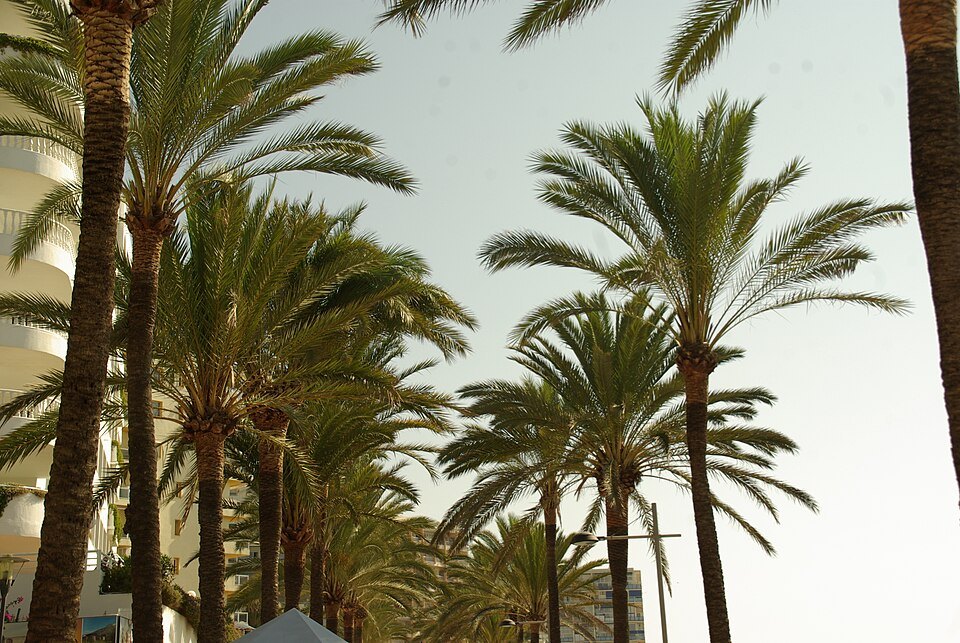
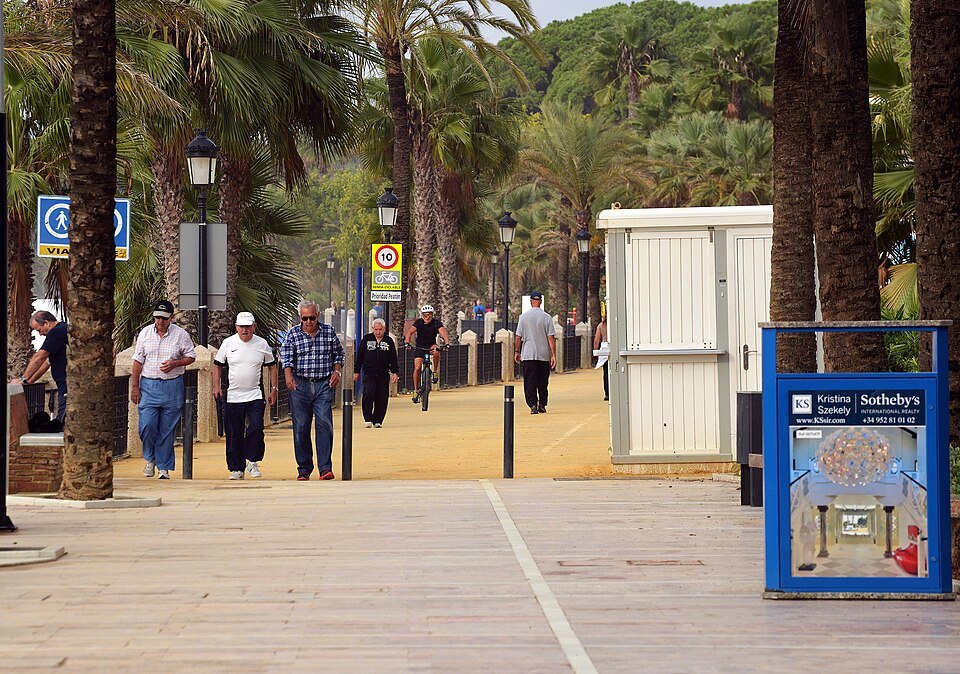
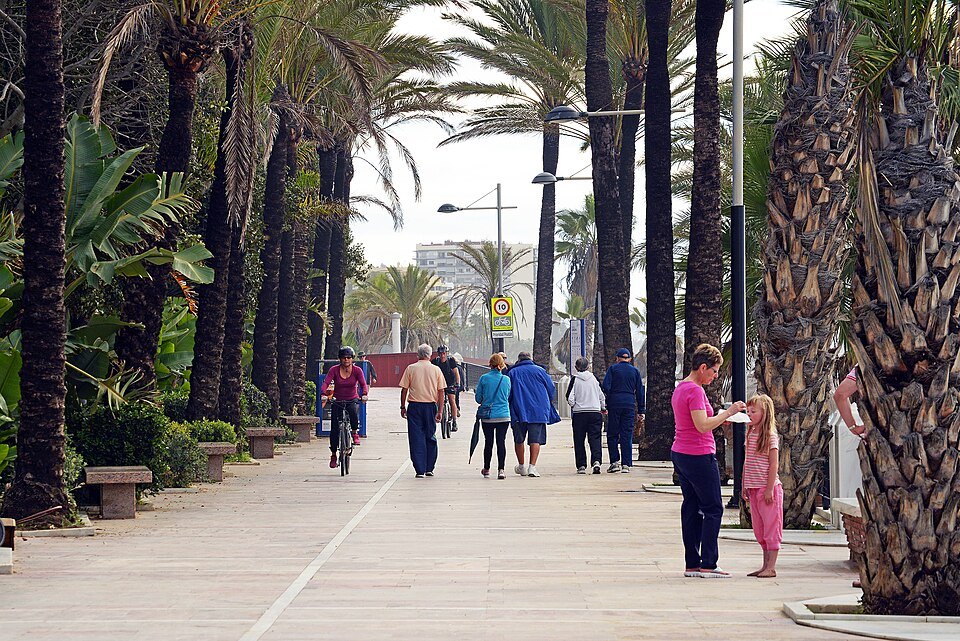
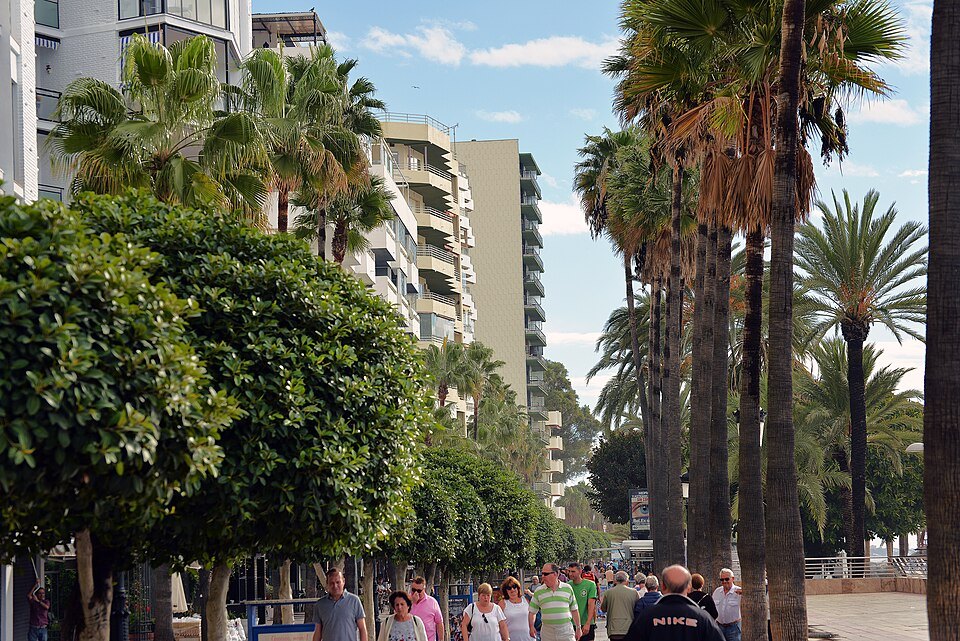
The promenade runs along the central beaches, past the marina and the lighthouse, and continues west along the coast toward the Golden Mile and Puerto Banús.
⭐ Because the town is spread along the coast rather than around a center, this is the closest thing Marbella has to a main street — the place where everyone walks in the evening.
Walking it
Puerto Banús is a long walk west along the coast — allow well over an hour each way at an easy pace, and more if you stop, which you will. Going one way on foot and coming back by bus or taxi is the usual arrangement.
Eastward the promenade passes the Port of Marbella, the town's own marina, and the beaches of La Fontanilla and El Faro either side of it.
Getting it right
⚠️ There is almost no shade on the seafront. In summer, walk it in the early morning or after the sun has dropped behind the mountains.
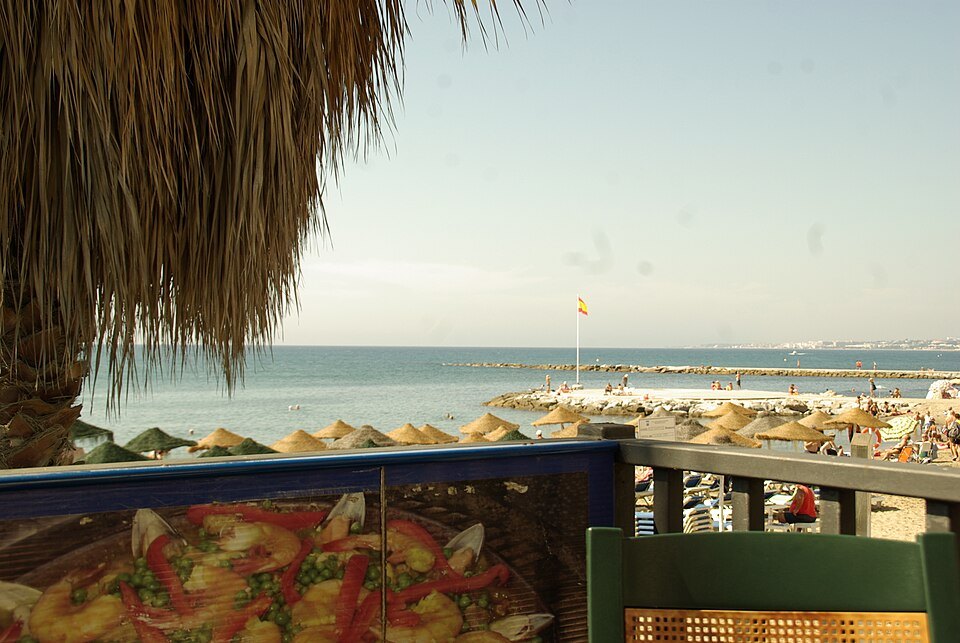
The beach bars along the sand — the chiringuitos — are where the grilled sardines are. See Eating & Drinking.
A coast of town beaches
Marbella has 27 kilometers of coast divided into 24 beaches, and because the town has spread along all of it, every one of them is urban or semi-urban. Most have moderate waves and fine to coarse sand, golden or dark, with the odd stretch of gravel, and they fill up in summer. In the center the promenade passes the beaches of Venus and La Fontanilla, the most central and the busiest, and El Faro and El Cable; Funny Beach is the one closest to the arch at the town's entrance. To the west, the beaches at Puerto Banús and San Pedro Alcántara fly the Blue Flag, and the beach in front of the Puente Romano hotel is among the best known.
Landmarks along the way
Walking west from the end of the Avenida del Mar, you pass the Marbella lighthouse and then the Parque de la Constitución, a municipal park with an auditorium of the same name. On the Plaza Rodrigo Bocanegra stands a copper-clad lighthouse from 1992, known to everyone as El Pirulí, the lollipop.
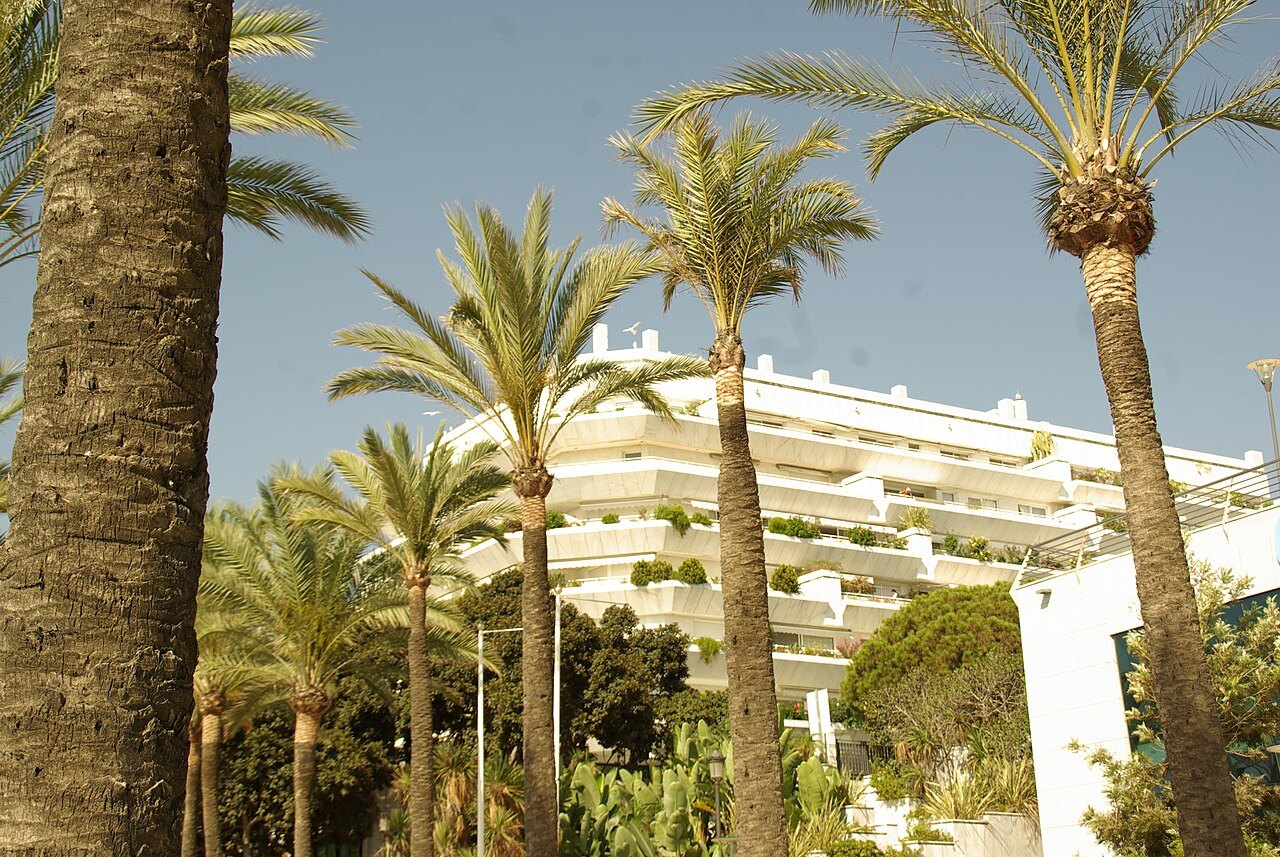
Beside the park, on the front line of the beach, are the Skol apartments, which opened in 1963 as one of the first hotels on the Costa del Sol and the first apartment hotel there; Spanish Wikipedia adds that it was the first in Spain to serve a buffet. It had 580 rooms, and when it was built this was the edge of town. Three buildings of different heights form a U open to the sea. The tallest is a deliberate echo of Le Corbusier's Unité d'Habitation in Marseille, with apartments of different heights slotted together, sun-breakers on the facade and a sculptural outside stair, and the heritage institute calls the whole a peculiar and very interesting example of modern architecture adapted to holiday living.
At the Banús end
At the main entrance to Puerto Banús, by the waiting quay, a much older building is easy to miss: the Torre del Duque, a watchtower inherited from the Nasrid defenses of the thirteenth to fifteenth centuries, judging by its type and building technique. It is a square tower a little over four meters on each side and about eleven meters high, of rubble masonry with stone and brick corners, with an entrance to its inner chamber high up on the north side. Inside there was a brick barrel-vaulted room with a fireplace and a stair to the roof.
Today it stands inside a hotel's gardens, which hide it almost completely. Its name probably refers to Rodrigo Ponce de León, Duke of Cádiz and Arcos, of whom the chronicler Andrés Bernáldez wrote that he took great pleasure in the craft of building and repairing castles, houses, walls and fortresses.
Why it works as a main street
Marbella stretches along the coast between the mountains and the sea, so the promenade is the one route that joins its pieces without a car: the town beaches, the marina, the hotels of the Golden Mile and finally the yachts of Puerto Banús. On a summer evening it is where you see the whole town, residents and visitors alike, out walking.
Further east
The same chain of watchtowers continues east of the center. At the mouth of the Río Real, now stranded at a turning of the old coast highway beside an abandoned Civil Guard barracks, stands the Torre del Río Real, built in 1575 as part of the Habsburg defense against Berber raids and used until the Peninsular War. It is round and tapering, about eleven meters high, on a square base, and three of its four machicolations survive.
Its name is said to recall the royal camp: after Marbella surrendered in 1485, Ferdinand's army marched east along the coast, and the chronicler Pulgar wrote of the king pitching his camp by the sea, the reales that gave the place its name.
Sources
- Apartamentos Skol — IAPH, Guía Digital del Patrimonio Cultural de Andalucía
- Torre del Duque — IAPH
- Marbella — Wikipedia (es)
- Torre del Río Real — IAPH