What it is
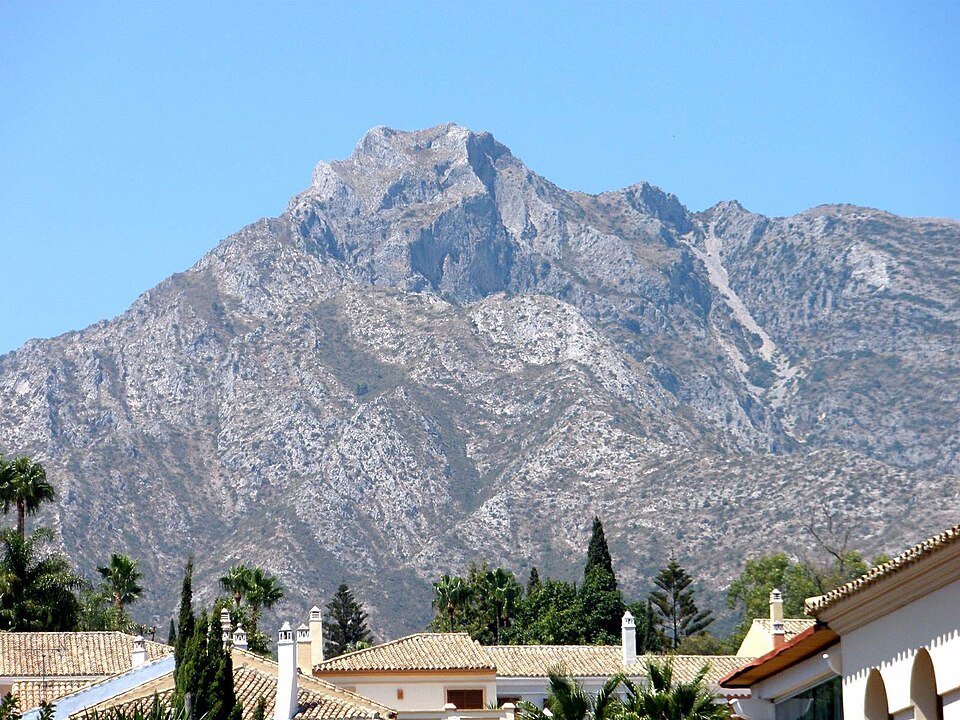
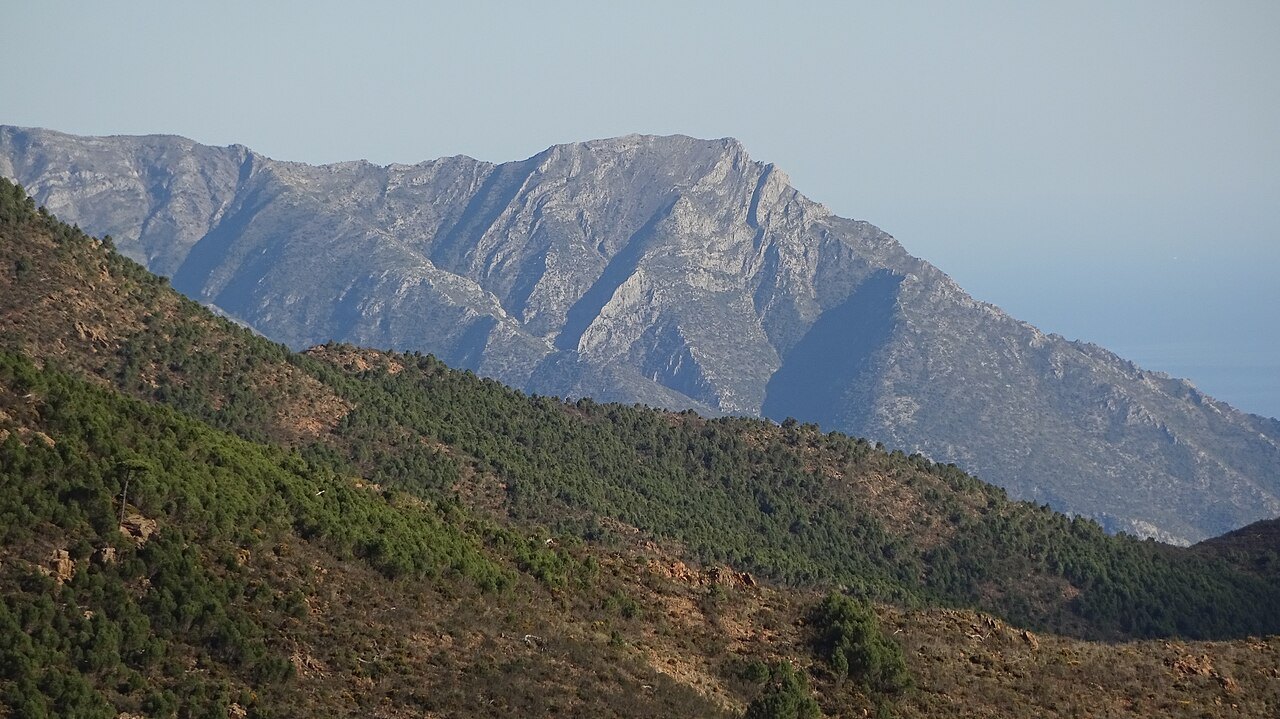
The Sierra Blanca is the limestone massif that rises straight behind Marbella. It takes its name from the pale color of its rock, which contrasts sharply with the reddish peridotite of the Sierra Bermeja and the Sierra Alpujata on either side.
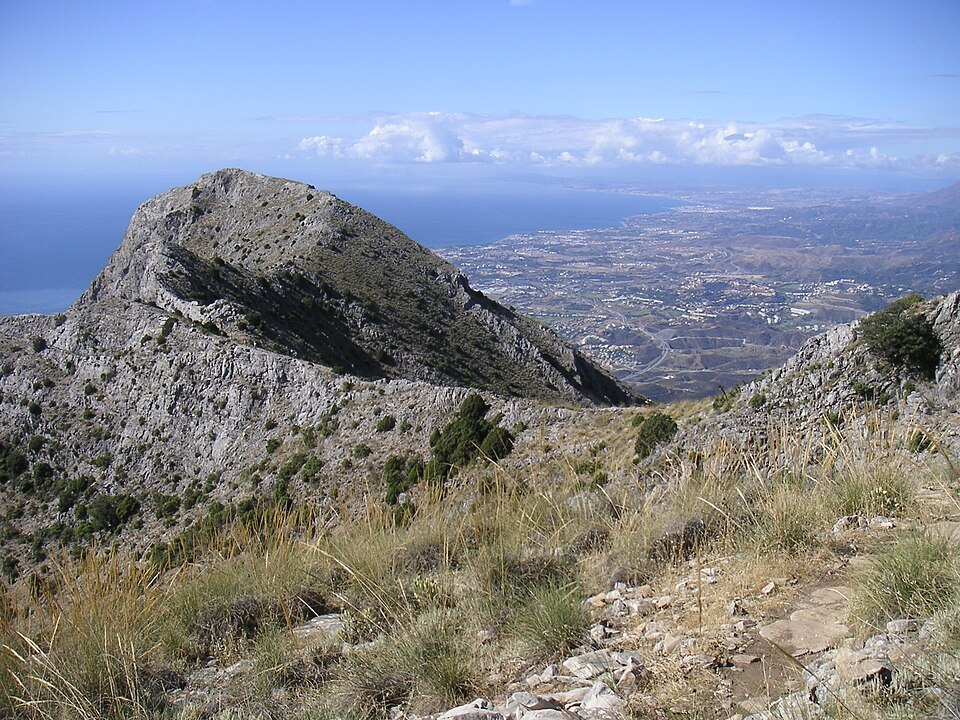
Its best-known summit, the Pico de la Concha, is 1,215 meters high and named because, seen from the west, it looks like the ribbed shell of a scallop. It is the second-highest point of the range after the Lastonar, at 1,275 meters.
Climbing it
The usual approaches start inland, from the Refugio de Juanar above Ojén or from the village of Istán. ⚠️ The final stretch runs along a rocky, exposed ridge. It is a real mountain walk, not a stroll, and it needs boots, a map and a clear forecast.
⚠️ Do not do it on a summer afternoon. There is almost no shade near the top, and far more people get into trouble in the Sierra Blanca from heat than from the terrain. October to May is the season.
Why it matters
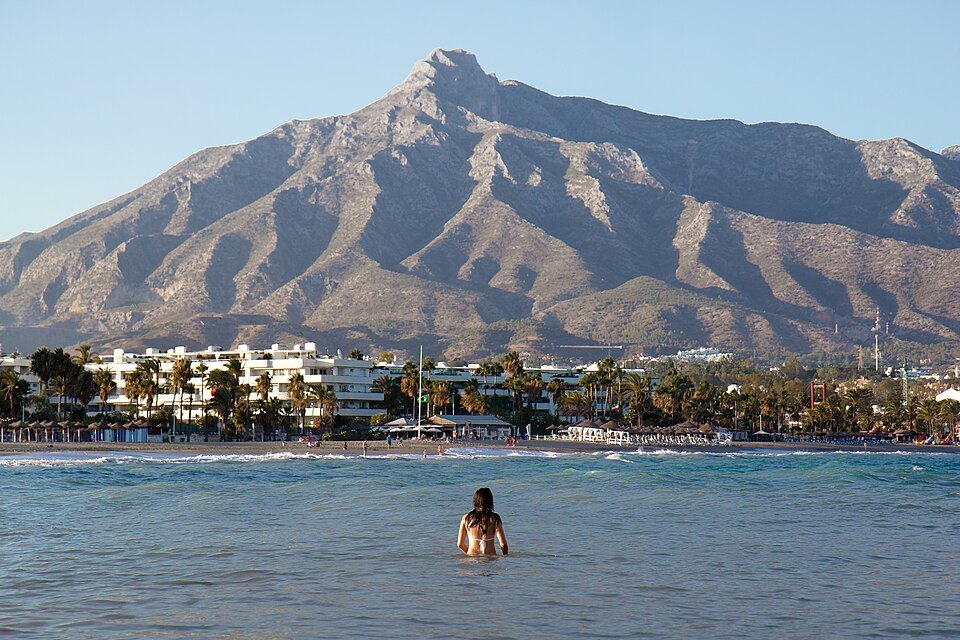
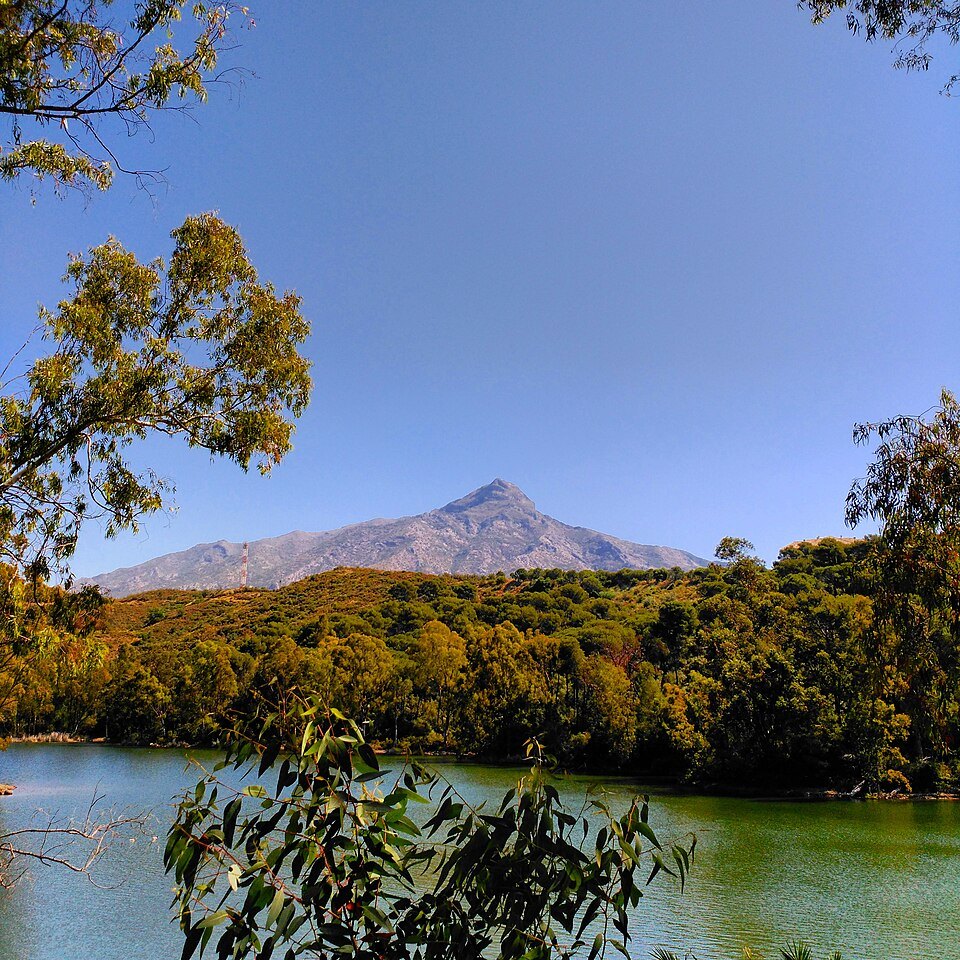
⭐ You see La Concha from almost everywhere in Marbella — from the beaches, the old town, the promenade. The mountain is the backdrop that makes the town look the way it does, and locals credit it with sheltering the coast below.
The range around the peak
The Sierra Blanca belongs to the Penibaetic ranges and lies between the western Costa del Sol and the Sierra de las Nieves, shared by the municipalities of Istán, Ojén, Marbella and Monda. Besides La Concha and the Lastonar, its peaks include the Cerro de la Zarina, at 1,141 meters, and the Cruz de Juanar, at 1,178 meters. Geographers count it as one of the five landscape units of Marbella, covering almost the whole of the old town's hinterland, and because the mountains come so close to the sea, the town has views of both from almost everywhere.
The Cruz de Juanar, in the municipality of Ojén, has a story attached. Fishermen caught in a shipwreck are said to have vowed to raise a cross on the first land they reached, and when they came ashore on the beaches of Marbella they put it on this mountain. Every year on May 1 the people of Ojén celebrate the Día de la Cruz de Juanar with a mass, and the Refugio de Juanar nearby, with its bar and hotel, is a base for walkers.
A forest that was cut and is coming back
The mountain was once covered by holm oak on the limestone and cork oak on the sandstone, giving way higher up to the pinsapo, the rare Spanish fir. Most of that forest was felled for fuel and for railway sleepers for the iron mines of Marbella in the nineteenth century. Today you walk through chestnut and cherry plantations, ferns, olive groves and planted pines, and among them two small relict stands of pinsapo, now recovering, along with replanted firs.
The mines and the mountain were bound together. Early in the nineteenth century the blast furnaces of Manuel Agustín Heredia on the Río Verde, the first civilian blast furnaces in Spain, burned wood from the Sierra Blanca, and from 1871 an English company carried ore from the mines of Ojén down the San Juan Bautista mining railway to a loading pier for shipment to England. In 1942 the town council sold the common lands of Sierra Blanca and Nagüeles to the state forestry service.
The regional government's sheet for the protected area lists 14 habitats of European interest, among them the pinsapo fir woods, and a scrub of Phoenician juniper and maritime pine growing on Triassic dolomite. The rock slides at the foot of the cliffs have a remarkably varied and specialized flora of their own.
What lives up there
Golden eagles, Bonelli's eagles, short-toed eagles, goshawks, peregrine falcons and griffon vultures nest or hunt here, along with Egyptian vultures on the rocks. In spring and autumn migrating birds, including black and red kites, booted eagles and honey buzzards, use the range as a resting place before crossing the Strait of Gibraltar. On the ground there are genets, badgers, Spanish ibex, roe deer, beech martens, foxes, wild boar and rabbits, and among the reptiles the ocellated lizard and the snub-nosed viper.
Some animals have gone. The bearded vulture, the wolf and the Iberian lynx disappeared in the twentieth century, and the brown bear much earlier; the chroniclers of the Catholic Monarchs recorded bears here when the court passed through Marbella during the war with Granada.
Protected
About 6,547 hectares of the range are a Special Area of Conservation in the European Natura 2000 network, declared by Decree 110/2015 of March 17, with a management plan approved in May 2015. The mountain is also part of the Intercontinental Biosphere Reserve of the Mediterranean, shared between Andalusia and Morocco and approved in October 2006.
Sources
- Sierra Blanca (ES6170011): Valores ambientales de los espacios protegidos — Junta de Andalucía
- Sierra Blanca — Wikipedia (es)
- Marbella — Wikipedia (es)